





Jeep Gladiator vs Ram 1500 towing comparisons usually begin with maximum trailer ratings, though towing strength involves far more than a single number. Truck size, frame structure, suspension tuning, axle gearing, payload limits, and wheelbase length all shape how a truck manages trailer weight on highways, steep grades, and uneven pavement. Some drivers want a truck that remains maneuverable in tighter spaces while still pulling boats or campers. Others prioritize trailer stability, cargo loading strength, and higher payload support for heavier equipment. Understanding how the Jeep Gladiator and Ram 1500 approach towing from completely different truck platforms creates a much clearer picture of which model fits specific hauling priorities.
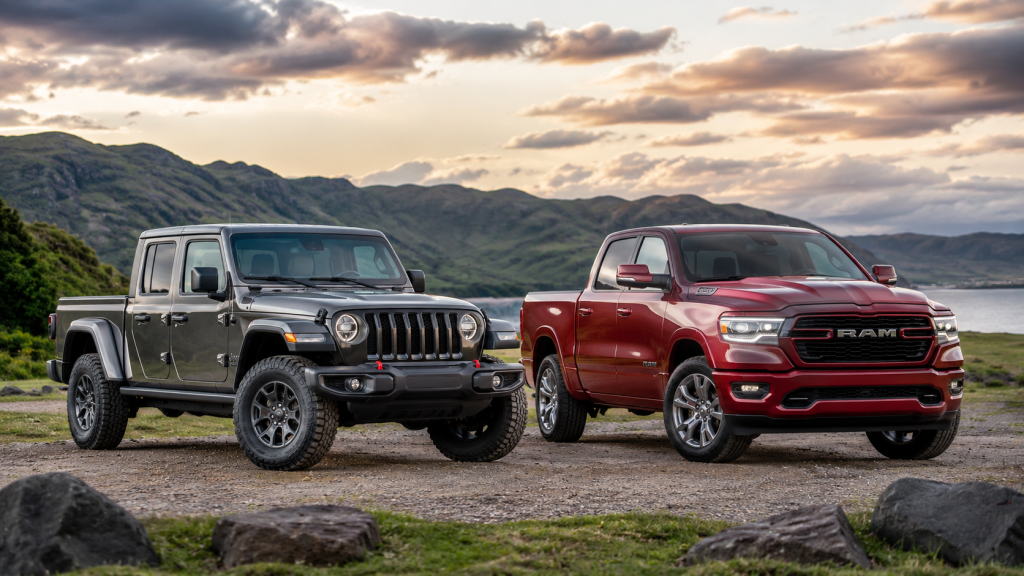
Why Midsize and Full Size Trucks Tow Differently
A midsize truck and a full size truck distribute trailer weight differently because the chassis dimensions, suspension structure, and overall mass are built around separate hauling goals. The Jeep Gladiator uses a narrower body structure and a shorter overall footprint than the Ram 1500, giving it tighter maneuverability in parking areas, trail access points, and urban driving situations. The Ram 1500 uses a larger frame structure with greater overall mass, which changes how trailer force transfers through the truck at highway speed.
The Jeep Gladiator towing structure starts with a reinforced body on frame platform paired with solid front and rear axles. Solid axles maintain wheel articulation during uneven terrain travel while also supporting trailer load distribution through the rear axle assembly. Gladiator Max Tow models increase towing support through revised axle gearing and cooling calibration, allowing the engine to maintain torque multiplication more effectively under heavier loads.
The Ram 1500 approaches towing from a different direction. Its larger chassis spreads trailer leverage across a wider footprint, reducing steering correction during highway towing. A longer full size wheelbase changes how trailer sway transfers through the truck during lane changes, crosswinds, and uneven pavement transitions.
Shoppers evaluating truck towing comparison pages should look beyond raw towing numbers and evaluate:
• Wheelbase length
• Rear suspension load control
• Axle gearing
• Trailer brake calibration
• Frame size and overall truck mass
These factors shape how stable a trailer feels once weight begins shifting across the truck during acceleration, braking, and steering corrections.
How Payload Capacity Changes Truck Utility
Payload capacity measures how much total weight a truck can carry inside the cabin and bed before reaching its maximum load threshold. Payload includes passengers, cargo, trailer tongue weight, tools, hitch hardware, and aftermarket accessories. This is where truck towing calculations become far more technical than most comparison pages explain.
A trailer transfers part of its weight directly onto the truck through tongue weight. If a camper weighs 6,000 pounds, tongue weight may add roughly 600 pounds directly onto the rear suspension. That load immediately reduces remaining payload capacity.
The Ram 1500 payload structure supports larger hauling workloads because its rear suspension and frame dimensions are built around heavier cargo transfer. A wider chassis and larger rear axle structure distribute weight more gradually during bed loading and trailer hookup. This changes how the truck settles under load and how braking force remains balanced across all four wheels.
The Jeep Gladiator payload structure remains highly functional for midsize truck hauling, though its smaller dimensions create different loading priorities. Cargo placement becomes far more important inside the Gladiator bed because weight concentration changes steering feel and rear suspension compression more quickly.
Truck payload discussions should include:
• Passenger weight calculations
• Trailer tongue weight
• Hitch equipment weight
• Bed cargo positioning
• Suspension compression under load
Ignoring payload math creates one of the most common towing mistakes among truck buyers. A truck may technically tow a trailer while still exceeding payload limits once passengers and cargo are added.
What Wheelbase Length and Suspension Tuning Change During Towing
Wheelbase length changes how trailer movement transfers into the truck during highway driving. A longer wheelbase spreads trailer leverage across a larger footprint, reducing how aggressively the trailer can pivot the rear of the truck during crosswinds or steering corrections.
The Ram 1500 wheelbase structure gives the truck a calmer towing posture during higher speed hauling. Trailer sway movement transfers more gradually through the frame, reducing sudden steering input corrections. Its rear suspension tuning also reduces rear squat under heavier tongue weight, helping maintain more balanced front tire contact during braking and cornering.
The Jeep Gladiator uses a longer wheelbase than the Wrangler platform it originates from, which creates far more towing stability than many drivers expect. Extending the chassis behind the cab changes how the truck distributes trailer leverage while still preserving the maneuverability advantages of a midsize truck.
Suspension tuning also shapes towing response:
• Softer suspension tuning absorbs road harshness more gradually
• Firmer rear calibration limits excessive rear compression
• Axle gearing changes torque delivery during uphill towing
• Tire sidewall stiffness changes trailer sway feedback
These details matter once trailer weight begins shifting dynamically across the chassis. Steering feel, braking stability, and lane correction response all change depending on how suspension geometry manages trailer leverage.
How Truck Bed Size and Cargo Positioning Affect Hauling
Truck bed utility involves more than total bed length. Cargo position changes how weight transfers through the frame, suspension, and steering system. Improper cargo loading increases rear suspension compression while unloading weight from the front axle, reducing steering precision and braking balance.
The Ram 1500 bed structure supports larger equipment loading because its wider cargo dimensions create more flexibility for palletized materials, generators, toolboxes, and longer construction items. Its larger bed volume also spreads weight more evenly across the chassis.
The Jeep Gladiator bed design focuses on multifunction truck utility while preserving maneuverability and trail access proportions. The bed dimensions support motorcycles, camping gear, outdoor equipment, and moderate trailer support while keeping the truck narrower and easier to navigate through tighter spaces.
Cargo loading strategy matters heavily in both trucks:
• Heavier cargo should remain low and close to the cab
• Uneven side loading changes steering balance
• Rear concentrated weight increases suspension squat
• Higher cargo placement raises center of gravity
Truck bed discussions that stop at dimensions fail to explain how hauling balance changes once weight begins moving through the suspension structure.
Which Truck Fits Different Towing and Payload Priorities
The Jeep Gladiator and Ram 1500 serve different towing priorities despite overlapping truck utility roles. The Gladiator balances midsize maneuverability, trail capable chassis engineering, and moderate towing support into a platform that remains highly adaptable across mixed driving situations. Drivers towing smaller campers, boats, utility trailers, or outdoor equipment may appreciate how the Gladiator preserves tighter movement without sacrificing truck utility.
The Ram 1500 prioritizes larger scale towing support through greater frame mass, wider chassis dimensions, increased payload strength, and calmer highway trailer response. Drivers hauling heavier trailers or carrying larger equipment loads may prefer how the Ram distributes trailer force more gradually during extended towing travel.
Choosing between the Jeep Gladiator and Ram 1500 involves evaluating:
• Trailer size
• Cargo weight
• Passenger load
• Parking and maneuverability priorities
• Highway towing frequency
• Bed loading requirements
The strongest truck choice is rarely the truck with the highest number alone. The better evaluation comes from understanding how truck structure, suspension tuning, payload support, and wheelbase design shape towing response once real weight enters the equation.
Connect with us


- August 2026
- July 2026
- June 2026
- May 2026
- April 2026
- May 2024
- March 2024
- February 2024
- December 2023
- November 2023
- October 2023
- September 2023
- August 2023
- July 2023
- June 2023
- May 2023
- April 2023
- March 2023
- February 2023
- January 2023
- December 2022
- November 2022
- October 2022
- September 2022
- August 2022
- July 2022
- June 2022
- May 2022
- April 2022
- March 2022
- February 2022
- January 2022