




Cutter Chrysler Jeep Dodge of Pearl City

Blog

Test Drives in Pearl City: Everything You Should Know

Have you ever bought shoes that appeared great in pictures but weren't quite right once you tried them on? Car buying can be similar, only that the stakes are higher given that a car is expensive and the return policies aren't quite the same! That's why test drives are one of the most crucial car buying aspects. Based on reviews and pictures, a car might appear perfect, but once you sit inside and feel it on the road, you may feel entirely different about it. Keep reading to learn more about test drives.

Key Takeaways:

  • Test drive more than one car (and do it on the same day) to get a feel for multiple options.
  • Test drive with the car's sound system off to listen if there are any cabin noises.
  • Brakes are crucial- so check if they can stop the car quickly or if there's a long braking distance.
  • You don't have to buy the car you've test driven the same day you test drive it- take time to make an informed decision.

Test Drives: What to Look for During the Drive

While you're on the test drive, pay attention to different aspects. You could bring a friend or family member who can jot your observations while you drive. Look out for the following:

How the Ride Feels

You should note the ease of steering- if the steering feels heavy, it might become an issue if you do a lot of city driving. Similarly, you may find that steering that's too light is challenging to properly control the car. Moreover, you need to check for the smoothness of the ride. If possible, try driving over bumpy roads or railroad tracks to better understand how the car handles.

The Brakes

Brakes are a very paramount component of a car. How do the brakes feel in the car? Do you feel you can stop quickly, or is there a long braking distance? Do the brakes make smooth stops difficult, or do they grab too hard?

The Transmission

If the car you're test-driving has a manual transmission, check how heavy the clutch is. Are the gears easy to shift into? Is it challenging to discern between the first and third gear when shifting? And if you're testing a car with an automatic transmission, notice how smoothly it downshifts and upshifts, particularly on hills.

Cabin Noise

With the car's sound system off, listen if there's any cabin noise. Is the car noisy? Can you hear the tires on the roadway? Do you have to raise your voice significantly on the freeway to have a conversation?

Maneuverability

Is the vehicle easy to maneuver through curves and tight turns? Does it accelerate well to allow for easy merges onto highways? Does it park easily? Does it fit well in parking spaces? Is a three-point turn possible in limited spaces? Does the font end sit low enough to scrape on parking curbs?

Test The Tech, Too

A modern car's technology interface can easily be a determining aspect of your car buying decision. Automakers have different opinions on the best and safest way to interact with technology. Some use control knobs, some have mouse pad-inspired controls, while others use touchscreens. Ensure you're comfortable with the interface, and consider these items too:

  • Infotainment screen: How easy is it to use? Can you carry out basic tasks like switching audio sources or changing the radio station?
  • Bluetooth: Pair your mobile phone and test audio streaming and calling.
  • Backup camera: Does the car have one? Is the view clear or grainy? Does it have lines or sensors to indicate distance?
  • Steering wheel controls: Do you like the layout? And is it intuitive or confusing?
  • Navigation: How detailed is the car map? Is it easy to input an address? Are the street names legible? Does it have traffic data?

Tips for Test Driving a Car

Test driving your future is an integral part of the car buying process. Here are a few helpful insights to follow before you test drive any car:

Do Your Homework

What type of vehicle works for your needs, lifestyle and family? You may not want a Lamborghini for a 50-mile round-trip commute.

Make a List

You need to make a list of cars and features you're looking for. Create a short list of about 3 cars you want to test drive. Also, check various consumer websites for the most recent car reviews- maybe the quality of your beloved brand could have slipped.

Ask to Pick the Route

Many dealerships have a route they ask their clients to follow. However, that might be too limited to make an informed car buying decision. As such, you should ask to pick the route to get a better feel for the car in different situations. You can try to include various road services, including flat stretches, side streets, hills, and highway driving.

Test Drive More than One Car- And Do It on the Same Day

Evaluating a car is challenging if you don't have anything to compare it to. So, test drive more than one car to get a feel for multiple options. Moreover, do the test drive in one day so it's easier to compare the cars?

Don't Rush Your Car Buying Decision

You don't have to buy the car the same day you test drive it. Instead, you can give yourself time to ponder the decision to ensure it's the best choice for you and your family.

Test Drive Your Next Car in Pearl City!

Go beyond kicking tires to see if that new ride suits you. And if you're ready to buy your next ride, visit our dealership in Pearl City today. We have a wide array of inventory to help you find your dream home. Besides, our auto experts are here to guide you through the car buying process and will encourage you to test drive more than one car for you to make an informed decision. Call ustoday!

Recommended Posts

Used Trucks for Sale Oahu and What to Inspect First

Used Trucks for Sale Oahu and What to Inspect First

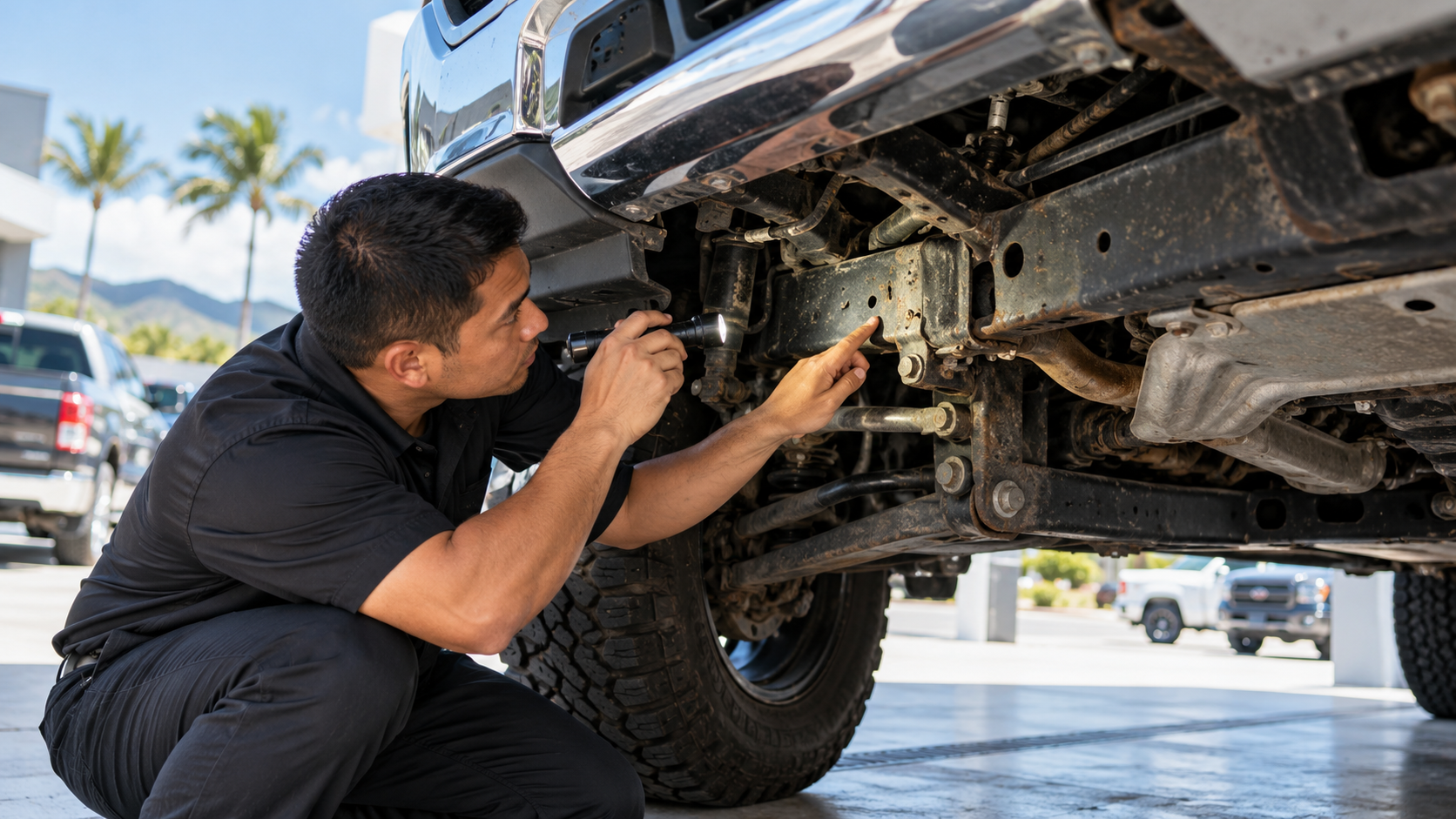
When comparing used trucks for sale on Oahu, the asking price and odometer reading only tell part of the story. A pickup may have spent years commuting, carrying equipment, towing trailers, or traveling across uneven terrain. Each use places different demands on its mechanical components. Therefore, a careful inspection should explore the truck's current condition and previous maintenance. Whether you're considering a Ram 1500, Jeep Gladiator, or another pickup, knowing what to inspect makes comparing vehicles easier. Here's how to examine a used truck before deciding whether its asking price makes sense. Check the Truck Frame and Undercarriage A truck's frame provides structural support for its body, suspension, and attached equipment. Damage underneath the vehicle may remain difficult to spot during a quick walk around the lot. Therefore, an undercarriage inspection deserves attention before you commit to purchasing. Start by looking for corrosion, bent metal, damaged mounting points, and signs of previous repairs. On Oahu, coastal moisture and salt exposure warrant particular attention. However, surface rust alone does not establish that a frame has structural damage. A qualified mechanic can distinguish minor corrosion from deterioration that requires repair or further examination. When reviewing used trucks for sale on Oahu, inspect these areas carefully: Frame rails and crossmembers: Look for substantial corrosion, cracking, unusual welds, or metal that appears bent or distorted. Suspension mounting points: Check for damaged brackets, loose components, and corrosion around attachment areas. Undercarriage and fluid lines: Examine visible brake lines, fuel lines, protective covers, and areas showing fresh fluid residue. A truck may look clean above its wheels while needing attention underneath. Moreover, recent undercoating or unusually fresh paint deserves a closer look when other damage signs are present. For questionable findings, request an independent inspection before making your final decision. The inspection should document the concern and explain any recommended repairs. Review Towing History and Suspension Wear Previous towing and hauling are important considerations when examining a used pickup. Carrying heavy equipment or pulling trailers can place additional demands on tires, suspension components, brakes, and drivetrain parts. However, the presence of a trailer hitch does not prove the truck was frequently used for heavy towing. Likewise, a clean truck bed cannot establish that the vehicle carried light loads throughout its life. Look for evidence across several areas instead of relying on one visible detail. Start with the hitch receiver, trailer wiring, and surrounding attachment points. Check for damage, loose wiring, unusual repairs, or severe corrosion. Then examine the rear suspension for worn bushings, leaking shocks, and damaged mounting hardware. Tire wear may also reveal issues with inflation, suspension geometry, or previous maintenance. However, uneven tread patterns require diagnosis before assigning a specific cause. The Ram 1500 provides a useful example because available drivetrains and equipment vary between configurations. Two trucks from the same model year may have different towing ratings and mechanical specifications. A Jeep Gladiator may require additional attention around its four-wheel-drive components and any aftermarket off-road equipment. Ask the seller about previous towing, scheduled maintenance, and major repairs. Compare those answers against available service records. A complete inspection should focus on what the truck needs today, not assumptions about how a former owner drove. Test the Engine, Transmission, Brakes, and Steering A test drive reveals how the truck responds during acceleration, braking, steering, and low-speed maneuvering. Start with a cold engine when possible. Listen for unusual knocking, prolonged rattling, or irregular idle sounds. Check the dashboard for warning indicators that remain illuminated after startup. During acceleration, the transmission should shift according to its normal operating characteristics. Harsh jolts, unexplained hesitation, or unusual noises deserve further investigation. Test the steering at different speeds where traffic and road safety permit. Watch for pulling, excessive vibration, or unusual looseness. Braking deserves separate attention. A truck should stop smoothly without strong pulling, grinding sounds, or abnormal pedal response. For additional guidance, Pearl City shoppers can review the dealership's article about questions to ask before a test drive. Use this checklist during your inspection: Engine and transmission: Listen for unusual sounds, observe warning lights, and note delayed or harsh shifting. Brakes and steering: Watch for vibration, pulling, grinding, and changes in steering or pedal response. Four-wheel-drive equipment: Verify equipped drive modes engage according to the owner's manual without unusual noises. A short drive cannot uncover every mechanical concern. Therefore, arrange a qualified inspection when symptoms appear or maintenance records raise questions. Pearl City drivers can also review the dealership's brake service information to learn about available inspections and repairs. The goal is to identify repair needs before they become unexpected expenses. Verify Maintenance Records and Truck Equipment What should you look for in a used truck's paperwork? Start with the vehicle identification number, service history, title information, and available accident records. A vehicle history report may contain ownership changes, reported collisions, mileage records, and title events. However, not every repair or maintenance visit appears in these reports. That makes current mechanical inspection equally important. Compare the truck's odometer reading with recorded service dates. Look for documented oil changes, fluid servicing, brake work, tire replacement, and major repairs. For a Ram pickup, verify the engine, drivetrain, axle configuration, and factory towing equipment. These details may change the truck's towing rating and suitability for your intended loads. Similarly, Jeep Gladiator shoppers should inspect four-wheel-drive equipment and any modifications. Aftermarket suspension or tire changes warrant a closer mechanical review. Do not assume a vehicle's advertised towing capacity applies to every configuration. Confirm the exact specifications using manufacturer information and the vehicle's identifying details. You can explore additional purchase documentation in Cutter's guide to what to check before buying a used vehicle. Before moving forward, verify three things: Vehicle history: Compare ownership records, reported damage, and mileage information against the seller's disclosures. Maintenance documentation: Review available records for major services, recurring repairs, and overdue maintenance. Equipment and specifications: Confirm the truck's drivetrain, installed towing hardware, and vehicle-specific ratings. A used truck inspection checklist should combine documents with physical findings. Neither source replaces the other. When necessary, the dealership's Pearl City service department can provide information about maintenance and inspection services. Decide Whether the Asking Price Makes Sense Used trucks for sale on Oahu can differ considerably in mileage, condition, equipment, and maintenance history. A lower asking price may look appealing initially. However, upcoming repairs can change the financial picture. Begin by comparing trucks with similar model years, engines, drivetrains, trim levels, and mileage. For example, a Ram 1500 with different towing equipment may not provide a direct comparison. Then account for tire replacement, brake repairs, fluid servicing, or other work identified during inspection. Request written repair estimates whenever a mechanical concern requires attention. Those figures give you a clearer basis for comparing vehicles. Local pricing also deserves consideration. Inventory availability and market demand can produce different asking prices across locations. The dealership's guide to buying a truck in Hawaii provides additional information about registration, financing, and dealership purchasing steps. Beyond the advertised price, review taxes, applicable government fees, financing terms, and optional products. Compare the total purchase amount, not just the monthly payment. The Pearl City finance department offers information about financing and preapproval options. Once you understand the expected costs, compare your options against your actual driving needs. A pickup intended for daily commuting may have different priorities from one intended for frequent towing. Evaluate those requirements before paying extra for equipment you may seldom use. You can browse used vehicle inventory in Pearl City to compare available pickups and other pre-owned vehicles. The right used truck is one whose condition, equipment, records, and price withstand careful review. Take your time with the inspection and ask questions whenever something seems unclear. Cutter Chrysler Jeep Dodge of Pearl City can assist with vehicle information and the next steps in your purchase.

dodge charger honolulu

Dodge Charger Honolulu for Daily Driving in Pearl City

Dodge Charger Honolulu shoppers may consider when one car needs to handle commuting, errands, and stronger acceleration. The best fit starts with engine choice, fuel use, drivetrain, and the roads you travel most. However, the current Charger offers several ways to balance those priorities. R/T provides strong output with a lower power level than Scat Pack. Therefore, the daily decision should focus on what you want the car to do every week. Charger as a Daily Vehicle in Pearl City Is Dodge Charger Honolulu a sensible daily vehicle for Pearl City? Yes, if its size, fuel use, power, and cabin layout suit your routine. In addition, the current Charger can cover commuting, errands, and longer drives without giving up its strong Dodge identity. R/T gives you 420 horsepower from the 3.0 liter twin turbo SIXPACK engine. Therefore, freeway merging and passing require little effort. Moreover, the power delivery also feels more immediate than many ordinary commuter cars. However, strong output is only one part of the daily decision. You should also consider parking, passenger space, fuel stops, and how far you drive each week. In addition, Pearl City traffic can place more value on smooth low speed control than maximum acceleration. Dodge Charger Honolulu shoppers should test the car on roads similar to their normal routes. Check visibility, steering effort, brake feel, and how the body fits into parking spaces. Those details tell you more about daily fit than a horsepower number alone. R/T and Scat Pack Serve Different Drivers How much engine output makes sense for a daily Charger? R/T gives 420 horsepower, while Scat Pack raises output to 550 horsepower. Therefore, both deliver strong acceleration, but they serve different priorities. R/T may make more sense for someone who wants fast response without choosing the highest gas output. In addition, its 468 pound feet of torque gives the car strong pull during merges and passing. As a result, that creates a broad power reserve for regular island travel. Scat Pack raises torque to 531 pound feet. Therefore, throttle inputs can produce much stronger acceleration. A driver choosing Scat Pack should consider whether that extra output matches daily use. Therefore, the extra power should serve a clear purpose. Before choosing, compare both trims around the same daily questions: Think about how much of your driving happens in traffic, on H1, or on shorter neighborhood trips. Compare how each trim responds from a stop and during a highway merge at moderate throttle. Review fuel requirements and weekly mileage so the engine choice fits your budget. Dodge Charger Honolulu shoppers may find that R/T covers more of their daily needs. By contrast, Scat Pack suits someone who places greater weight on stronger acceleration. What Charger Fuel Economy Means for a Commute What does Charger fuel economy mean for a daily commute? It shows how much fuel the car may use across a mix of city and highway travel. Dodge states that the 2026 Charger R/T reaches 23 mpg combined. Therefore, that number gives you a starting point for weekly fuel planning. A 230 mile week would equal about ten gallons at 23 mpg. However, your own result can change with traffic, speed, idling, and throttle input. Pearl City drivers may spend part of the week in slower traffic. Therefore, fuel use can rise when the car spends more time idling or moving at low speed. Highway travel can create a different result. In addition, stronger acceleration uses more fuel than gentle throttle input. That means the same Charger can return different mileage across different weeks. The combined rating works best as a planning reference, not a promise. Dodge Charger Honolulu owners can use it to estimate weekly fuel needs. Dodge Charger Honolulu shoppers should estimate their normal weekly mileage before choosing a trim. Multiply that distance by local fuel costs after dividing by the expected mpg. That simple calculation turns fuel economy into a budget number you can compare. AWD Changes How Power Reaches the Road Does all wheel drive change how the Charger works on ordinary Oahu roads? Yes. AWD can send engine power through all four wheels when the drivetrain calls for it. That gives the current Charger another way to manage strong torque. The Scat Pack comes with standard AWD and can switch to rear wheel drive. Therefore, the driver can move between two distinct power delivery layouts. AWD spreads power across four contact patches, while rear wheel drive sends power only to the rear axle. On wet pavement, that difference can matter during starts or stronger acceleration. In addition, AWD can make the car easier to launch smoothly when the road surface has less grip. It still cannot replace careful throttle input or proper tires. Dodge Charger Honolulu shoppers should think about how much time they spend on H1, neighborhood streets, and wet roads. The drivetrain should support the routes you use most. Dodge Charger Honolulu drivers should compare AWD and rear wheel drive during a test drive. Matching the Charger to Pearl City Life Which Pearl City routines fit the Charger best? It works well for someone who wants strong acceleration while still carrying passengers, groceries, and everyday gear. The final choice should reflect commute length, parking, fuel budget, and desired engine output. For shorter commutes, R/T may offer more power than you need while still keeping the setup straightforward. In addition, its combined 23 mpg rating gives you a clear planning number. Longer weekly mileage makes fuel cost more important. Scat Pack may appeal more to someone who wants the highest gas output in the current lineup. However, that choice should come after you consider traffic, road space, and fuel cost. More power only adds value when you plan to use it. Cutter Chrysler Dodge Jeep of Pearl City can show you current Charger trims in person. Sit in the car, test visibility, and drive routes similar to your normal week. Then compare R/T and Scat Pack with the same fuel, road, and commute questions in mind. A Charger can fit daily life in Pearl City when the trim matches the way you drive. Start with the routine you already have, then choose the engine and drivetrain that fit it.

used car dealer near me

Used Car Dealer Near Me and What to Check Before Buying

A used car dealer near me should make it possible to review more than the vehicle sitting on the lot. History, warranty terms, current condition, recalls, and final transaction figures all deserve separate attention. Therefore, a careful purchase starts with written information and then moves into a physical review. A test drive adds another layer because it shows how the vehicle responds on the road. The final step is making sure the price, financing, and paperwork all match what you agreed to. Start With the Vehicle and Written Disclosures What should you expect from a used car dealer near me before committing? You should be able to review the vehicle, its disclosures, and the transaction details before signing. Therefore, start with the Buyers Guide and the basic vehicle information. The Buyers Guide explains whether the vehicle carries warranty coverage or is sold as is. In addition, it provides written terms that should match what you hear during the sale. Keep a copy with your records after purchase. Next, review the mileage, trim, major equipment, and visible wear. Those details establish the vehicle you are evaluating before pricing or financing enters the discussion. However, they do not tell you everything about its past. A used car dealer near me should also provide enough time to inspect the vehicle before you commit. Check the exterior, interior, tires, lights, glass, and controls. Therefore, any questions can be raised before paperwork begins. History Reports and Inspections Serve Different Purposes Does a clean vehicle history report mean the car needs no inspection? No. A history report shows recorded events, while an inspection checks the vehicle as it sits today. A report may show title data, reported collisions, prior owners, and recorded mileage. However, not every repair or maintenance event appears in those records. Therefore, a clean report should not replace a physical review. An inspection can reveal tire wear, fluid leaks, brake concerns, worn suspension parts, or other present issues. In addition, it can show whether prior repairs appear complete and secure. That makes the inspection useful even when the history looks clean. Before committing, compare three sources of information. Review the Buyers Guide so warranty or as is terms are clear in writing. Review the history report for title records, reported damage, ownership, and mileage information. Review the current mechanical state through inspection so present concerns are not hidden by past records. A used car dealer near me should make these checks easy to discuss. Therefore, ask about anything that does not match across the records and the physical vehicle. What to Check During a Used Vehicle Test Drive What should you check during a used vehicle test drive? Focus on steering, braking, power delivery, noise, vibration, visibility, and controls. Each area can reveal something that a parked inspection cannot. Start slowly and listen for unusual noises as the vehicle begins moving. In addition, watch the dashboard for warning lights that stay illuminated. Steering should respond cleanly without pulling or unusual vibration. Next, test the brakes with normal pressure. The vehicle should stop in a straight line without strong vibration or grinding sounds. Therefore, any change in pedal feel deserves a closer look. During acceleration, pay attention to transmission response and engine smoothness. Shifts should occur without harsh jolts or long delays. In addition, test visibility through the windshield, mirrors, and rear glass. A used car dealer near me should give you time to drive on roads similar to your routine. Use that time to check parking, turning, merging, and low speed control. Therefore, the test drive becomes a vehicle review, not a quick lap around the block. Verify Recall Status and Current Mechanical State How do you know whether the vehicle has an open recall? Use the 17 character VIN to check recall status before taking delivery. Recall information belongs to the exact vehicle, not the model name alone. Moreover, the VIN can be found near the lower windshield on the driver side. It also appears on registration paperwork and the driver door label. Therefore, use the full VIN when checking recall records. An open recall does not automatically mean the vehicle has a current mechanical problem. It means a manufacturer campaign remains open for that VIN. In addition, the repair path can vary by campaign. Additionally, current mechanical state still needs separate attention. Tires, brakes, fluids, battery health, warning lights, and visible leaks should be reviewed. Therefore, recall status and inspection should remain two different checks. A used car dealer near me should be able to discuss what has been inspected or repaired before sale. Ask what work has already been completed. In addition, ask whether any open recall requires a separate appointment. Review Price Financing and Paperwork Before Signing What should be clear before you sign the final paperwork? The sale price, APR, loan term, fees, optional products, warranty terms, and total cost should all be visible. Therefore, review each figure before focusing on the monthly payment. A lower payment can come from a longer loan term. That can increase the total amount of interest paid. In addition, optional products can raise the financed amount even when the vehicle price stays the same. Moreover, ask for a full breakdown before signing. Compare the sale price with the amount financed and the total of payments. Therefore, you can see where taxes, fees, trade value, down payment, and optional products appear. Before committing, review these final items: Confirm the sale price and make sure it matches the number discussed before financing. Review APR and loan length together so the monthly payment does not hide a higher total borrowing cost. Check every optional product and fee so you know which items are required and which are elective. Cutter Chrysler Dodge Jeep of Pearl City can walk through used inventory and transaction details before you decide. Bring your questions, review the records, and take time with the test drive. Then read the final paperwork carefully so the vehicle, price, and terms all match what you agreed to.