




When comparing used trucks for sale on Oahu, the asking price and odometer reading only tell part of the story. A pickup may have spent years commuting, carrying equipment, towing trailers, or traveling across uneven terrain. Each use places different demands on its mechanical components. Therefore, a careful inspection should explore the truck's current condition and previous maintenance.
Whether you're considering a Ram 1500, Jeep Gladiator, or another pickup, knowing what to inspect makes comparing vehicles easier. Here's how to examine a used truck before deciding whether its asking price makes sense.
Check the Truck Frame and Undercarriage
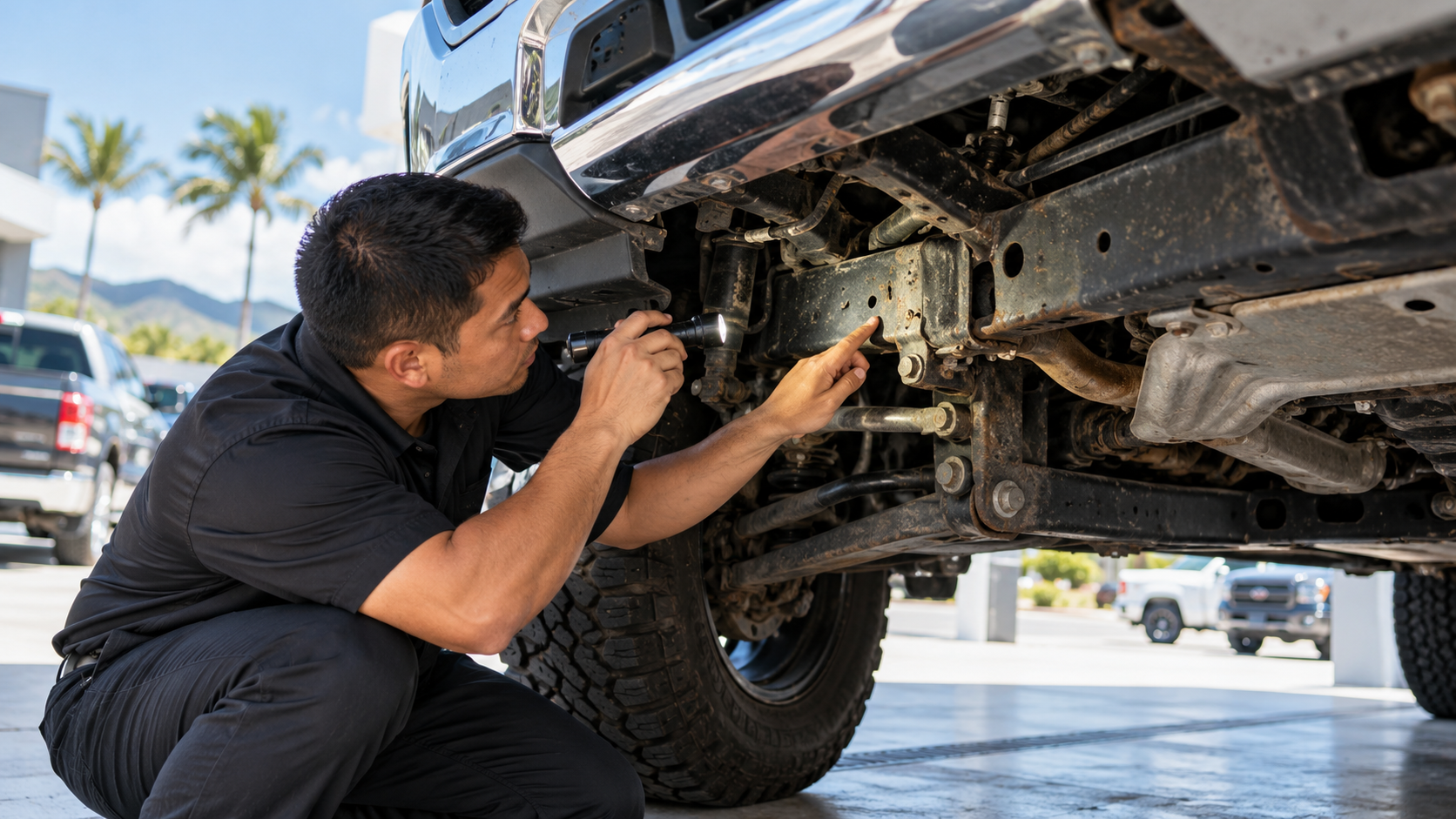
A truck's frame provides structural support for its body, suspension, and attached equipment. Damage underneath the vehicle may remain difficult to spot during a quick walk around the lot. Therefore, an undercarriage inspection deserves attention before you commit to purchasing.
Start by looking for corrosion, bent metal, damaged mounting points, and signs of previous repairs. On Oahu, coastal moisture and salt exposure warrant particular attention. However, surface rust alone does not establish that a frame has structural damage.
A qualified mechanic can distinguish minor corrosion from deterioration that requires repair or further examination. When reviewing used trucks for sale on Oahu, inspect these areas carefully:
- Frame rails and crossmembers: Look for substantial corrosion, cracking, unusual welds, or metal that appears bent or distorted.
- Suspension mounting points: Check for damaged brackets, loose components, and corrosion around attachment areas.
- Undercarriage and fluid lines: Examine visible brake lines, fuel lines, protective covers, and areas showing fresh fluid residue.
A truck may look clean above its wheels while needing attention underneath. Moreover, recent undercoating or unusually fresh paint deserves a closer look when other damage signs are present.
For questionable findings, request an independent inspection before making your final decision. The inspection should document the concern and explain any recommended repairs.
Review Towing History and Suspension Wear
Previous towing and hauling are important considerations when examining a used pickup. Carrying heavy equipment or pulling trailers can place additional demands on tires, suspension components, brakes, and drivetrain parts.
However, the presence of a trailer hitch does not prove the truck was frequently used for heavy towing. Likewise, a clean truck bed cannot establish that the vehicle carried light loads throughout its life.
Look for evidence across several areas instead of relying on one visible detail. Start with the hitch receiver, trailer wiring, and surrounding attachment points. Check for damage, loose wiring, unusual repairs, or severe corrosion. Then examine the rear suspension for worn bushings, leaking shocks, and damaged mounting hardware.
Tire wear may also reveal issues with inflation, suspension geometry, or previous maintenance. However, uneven tread patterns require diagnosis before assigning a specific cause.
The Ram 1500 provides a useful example because available drivetrains and equipment vary between configurations. Two trucks from the same model year may have different towing ratings and mechanical specifications. A Jeep Gladiator may require additional attention around its four-wheel-drive components and any aftermarket off-road equipment.
Ask the seller about previous towing, scheduled maintenance, and major repairs. Compare those answers against available service records. A complete inspection should focus on what the truck needs today, not assumptions about how a former owner drove.
Test the Engine, Transmission, Brakes, and Steering
A test drive reveals how the truck responds during acceleration, braking, steering, and low-speed maneuvering. Start with a cold engine when possible. Listen for unusual knocking, prolonged rattling, or irregular idle sounds. Check the dashboard for warning indicators that remain illuminated after startup.
During acceleration, the transmission should shift according to its normal operating characteristics. Harsh jolts, unexplained hesitation, or unusual noises deserve further investigation.
Test the steering at different speeds where traffic and road safety permit. Watch for pulling, excessive vibration, or unusual looseness. Braking deserves separate attention. A truck should stop smoothly without strong pulling, grinding sounds, or abnormal pedal response.
For additional guidance, Pearl City shoppers can review the dealership's article about questions to ask before a test drive.
Use this checklist during your inspection:
- Engine and transmission: Listen for unusual sounds, observe warning lights, and note delayed or harsh shifting.
- Brakes and steering: Watch for vibration, pulling, grinding, and changes in steering or pedal response.
- Four-wheel-drive equipment: Verify equipped drive modes engage according to the owner's manual without unusual noises.
A short drive cannot uncover every mechanical concern. Therefore, arrange a qualified inspection when symptoms appear or maintenance records raise questions.
Pearl City drivers can also review the dealership's brake service information to learn about available inspections and repairs. The goal is to identify repair needs before they become unexpected expenses.
Verify Maintenance Records and Truck Equipment
What should you look for in a used truck's paperwork? Start with the vehicle identification number, service history, title information, and available accident records.
A vehicle history report may contain ownership changes, reported collisions, mileage records, and title events. However, not every repair or maintenance visit appears in these reports. That makes current mechanical inspection equally important.
Compare the truck's odometer reading with recorded service dates. Look for documented oil changes, fluid servicing, brake work, tire replacement, and major repairs.
For a Ram pickup, verify the engine, drivetrain, axle configuration, and factory towing equipment. These details may change the truck's towing rating and suitability for your intended loads. Similarly, Jeep Gladiator shoppers should inspect four-wheel-drive equipment and any modifications. Aftermarket suspension or tire changes warrant a closer mechanical review.
Do not assume a vehicle's advertised towing capacity applies to every configuration. Confirm the exact specifications using manufacturer information and the vehicle's identifying details.
You can explore additional purchase documentation in Cutter's guide to what to check before buying a used vehicle.
Before moving forward, verify three things:
- Vehicle history: Compare ownership records, reported damage, and mileage information against the seller's disclosures.
- Maintenance documentation: Review available records for major services, recurring repairs, and overdue maintenance.
- Equipment and specifications: Confirm the truck's drivetrain, installed towing hardware, and vehicle-specific ratings.
A used truck inspection checklist should combine documents with physical findings. Neither source replaces the other.
When necessary, the dealership's Pearl City service department can provide information about maintenance and inspection services.
Decide Whether the Asking Price Makes Sense
Used trucks for sale on Oahu can differ considerably in mileage, condition, equipment, and maintenance history. A lower asking price may look appealing initially. However, upcoming repairs can change the financial picture.
Begin by comparing trucks with similar model years, engines, drivetrains, trim levels, and mileage. For example, a Ram 1500 with different towing equipment may not provide a direct comparison.
Then account for tire replacement, brake repairs, fluid servicing, or other work identified during inspection. Request written repair estimates whenever a mechanical concern requires attention. Those figures give you a clearer basis for comparing vehicles.
Local pricing also deserves consideration. Inventory availability and market demand can produce different asking prices across locations.
The dealership's guide to buying a truck in Hawaii provides additional information about registration, financing, and dealership purchasing steps.
Beyond the advertised price, review taxes, applicable government fees, financing terms, and optional products. Compare the total purchase amount, not just the monthly payment.
The Pearl City finance department offers information about financing and preapproval options.
Once you understand the expected costs, compare your options against your actual driving needs. A pickup intended for daily commuting may have different priorities from one intended for frequent towing. Evaluate those requirements before paying extra for equipment you may seldom use.
You can browse used vehicle inventory in Pearl City to compare available pickups and other pre-owned vehicles.
The right used truck is one whose condition, equipment, records, and price withstand careful review. Take your time with the inspection and ask questions whenever something seems unclear. Cutter Chrysler Jeep Dodge of Pearl City can assist with vehicle information and the next steps in your purchase.