





Cutter Chrysler Jeep Dodge of Pearl City

Blog

All Blog Cutter Chrysler Jeep Dodge of Pearl City Dealer Cutter Chrysler Jeep Dodge of Pearl City Service Pearl City Jeep Dealer Pearl City CDJR Dealer Pearl City Dodge Dealer Pearl City RAM Dealer
Common Transmission Problems & Stalling | Pearl City HI
in Blog

Common Transmission Problems & Stalling

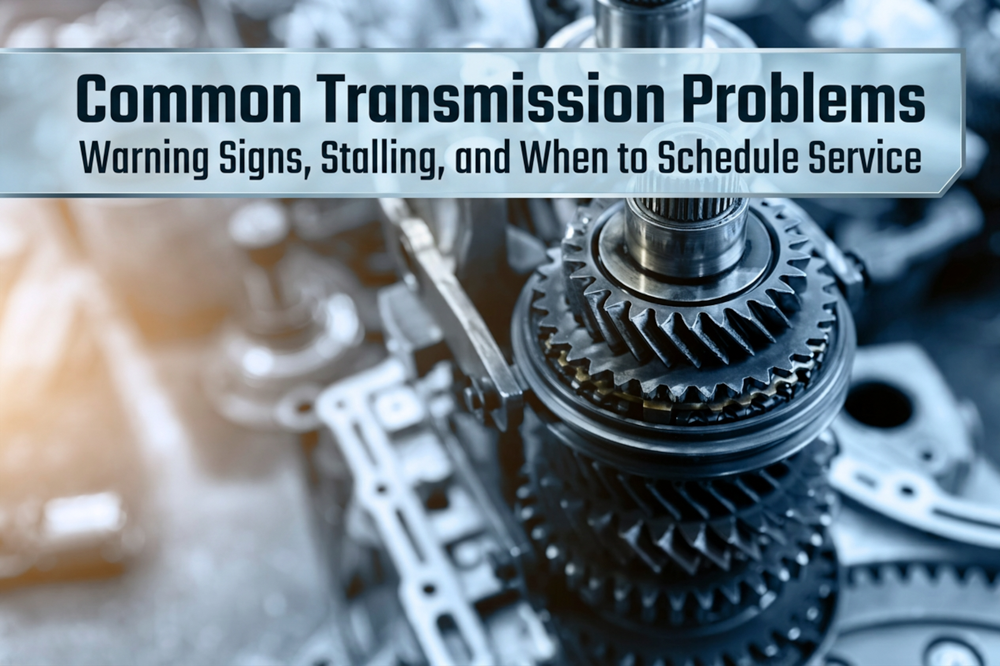
Common Transmission Problems: Warning Signs, Stalling, and When to Schedule Service Your vehicle's transmission is one of its most important and most expensive components, and catching a problem early can save you from a much bigger repair later. Whether you drive a Jeep Wrangler, a Ram 1500, a Chrysler Pacifica, or a Dodge Durango around Pearl City, HI, knowing the common transmission warning signs helps you act before a minor issue becomes a major one. Just as important: many of these symptoms can have more than one cause. A rough shift or a stall does not automatically mean the transmission is failing. This guide covers what each sign can point to, why a car may stall while driving and then start back up, and when it is time to have a professional take a look. What Does the Transmission Do? The transmission transfers power from the engine to the wheels and manages gear changes so your vehicle accelerates, cruises, and slows down smoothly. When something goes wrong inside it, you will usually notice a change in how the vehicle feels, sounds, or responds. Those changes are worth paying attention to, especially in the stop-and-go traffic on Kamehameha Highway and the H-1, where the transmission is shifting constantly. Common Transmission Warning Signs 1. Transmission Slipping Slipping is one of the most recognizable warning signs. The engine revs higher without a matching increase in speed, the vehicle seems to lose power mid-acceleration, or it unexpectedly shifts gears on its own. Slipping can be related to low or worn fluid, worn internal clutches, or a control problem, which is why it calls for a proper diagnosis. 2. Delayed Engagement or Delayed Shifting If you shift from Park into Drive or Reverse and there is a noticeable pause before the vehicle moves, that hesitation is worth having checked. The same goes for upshifts that seem to hang before the next gear engages. A healthy automatic transmission responds almost immediately. 3. Rough or Hard Shifting Gear changes that feel clunky, jerky, or end with a thud are a sign that something is off. Smooth transitions are normal. Harsh shifts can come from fluid condition, a sensor or software issue, worn engine or transmission mounts, or internal wear. 4. Whining, Humming, or Clunking Noises Whining or humming that changes with vehicle speed, or a clunk when you shift into gear, can indicate low fluid or worn internal components. In a manual transmission, grinding during shifts often points to clutch or synchronizer wear. 5. Burning Smell or Overheating Transmission fluid lubricates and cools the transmission's internal parts. When fluid runs low or breaks down, friction and heat build up and can produce a distinct burnt odor. Heavy loads, towing, and long climbs can add heat as well. If you notice a burning smell, have the vehicle inspected promptly. 6. Fluid Leaks Automatic transmission fluid is typically red or reddish when fresh and darkens as it ages. A reddish spot or puddle under the middle or front of your vehicle can indicate a leak. Running low on fluid is a common contributor to transmission problems and can lead to internal damage if left alone. 7. Check Engine or Transmission Warning Light A check engine light can mean many things, and some vehicles also have a dedicated transmission temperature or warning indicator. A diagnostic scan reads the stored trouble codes so a technician can see what the system has flagged and test from there. 8. Reduced Fuel Economy A transmission that slips, shifts late, or has a torque converter that is not locking up properly can make the engine work harder, which may show up as worse fuel economy. Because many other issues can also reduce mileage, treat this as a clue to mention to your technician rather than a diagnosis on its own. Why Does My Car Stall While Driving but Start Back Up? A vehicle that stalls while driving and then restarts can be unsettling, and it is one of the most common questions drivers search for. The important thing to know is that stalling has many possible causes, and most of them are not the transmission. A stall that restarts does not confirm a transmission failure. Possible causes include: Fuel delivery problems, such as a weak fuel pump, a clogged fuel filter, or running very low on fuel Ignition issues, such as worn spark plugs or a failing ignition coil Faulty sensors, such as a crankshaft or camshaft position sensor or a mass airflow sensor, which the engine relies on to run Air and idle control issues, such as a dirty throttle body or a vacuum leak, which often cause stalling at idle or when coming to a stop Electrical and charging problems, such as a weak battery, a failing alternator, or loose or corroded connections Transmission-related causes, such as a torque converter clutch that does not release when you slow down, which can stall the engine as the vehicle comes to a stop Pay attention to when the stall happens. Does it happen at idle, when braking to a stop, while accelerating, or at highway speed? Is the engine hot or cold? Is a warning light on? Those details help a technician narrow down the cause much faster. If your vehicle stalls while driving: turn on your hazard lights, steer to a safe spot, and remember that steering and braking take more effort when the engine is off. Once you are safely stopped, try restarting. Even if it restarts and drives normally, schedule a diagnosis. An intermittent stall can happen again at a worse moment. When Continued Driving Could Make Things Worse Some symptoms are a reason to stop driving and arrange service as soon as possible, rather than waiting for your next oil change: The vehicle will not move, or engages into gear only after a long delay The engine revs freely while the vehicle loses speed (significant slipping) A burning smell along with a warning light An active fluid leak that leaves a puddle Repeated stalling, especially in traffic or at highway speed A flashing check engine light Continuing to drive with these symptoms can increase wear and turn a manageable repair into a much larger one. Milder signs, such as an occasional firm shift, still deserve a check, but you can usually schedule it at a convenient time. When to Schedule a Professional Diagnosis If you notice any of the signs above, the best next step is a professional diagnosis rather than guessing at the cause. A technician can read trouble codes, check fluid level and condition, test-drive the vehicle to reproduce the symptom, and inspect related systems so you only pay for the repair you actually need. The service center at Cutter Chrysler Jeep Dodge of Pearl City works on Chrysler, Dodge, Jeep, and Ram vehicles and can diagnose shifting, stalling, and drivability concerns. Learn more about the Cutter CDJR Pearl City service department, or schedule your transmission diagnosis online. Want to know what each position on your shifter does? Read our guide to automatic gear shift letters and numbers. Frequently Asked Questions About Transmission Problems What are the most common transmission warning signs? Common signs include slipping, delayed engagement when shifting into gear, rough or hard shifts, whining or clunking noises, a burning smell, reddish fluid leaks, and a check engine or transmission warning light. What does it feel like when a transmission slips? The engine revs higher without a matching increase in speed, the vehicle may feel like it loses power while accelerating, or it may shift gears unexpectedly on its own. Why does my car stall while driving but start back up? Stalling that restarts can be caused by fuel delivery problems, ignition issues, faulty sensors, vacuum leaks, a dirty throttle body, electrical or charging problems, or in some cases a torque converter clutch that does not release. A stall alone does not confirm a transmission problem, so a professional diagnosis is the best way to find the cause. Can a bad transmission cause a car to stall? It can. For example, a torque converter clutch that does not disengage can stall the engine when the vehicle slows to a stop. However, many stalls are caused by engine, fuel, or electrical issues, which is why testing is needed before assuming the transmission is at fault. Is it safe to drive with transmission problems? It depends on the symptom. Slipping, failure to engage, a burning smell, an active fluid leak, repeated stalling, or a flashing check engine light are reasons to stop driving and arrange service soon. Milder symptoms should still be checked to keep them from getting worse. What color is transmission fluid when it leaks? Automatic transmission fluid is typically red or reddish when fresh and turns darker brown as it ages. A reddish spot under your vehicle is a common sign of a transmission fluid leak. Get Transmission Help From Cutter CDJR Pearl City Recognizing transmission warning signs early is the most effective way to protect your vehicle and your budget. From slipping gears and rough shifts to leaks, odd noises, and stalling, these symptoms are your vehicle's way of asking for attention. Drivers throughout Pearl City, Aiea, Waipahu, Mililani, Ewa Beach, Kapolei, and Honolulu can count on Cutter Chrysler Jeep Dodge of Pearl City for honest diagnosis and factory-trained service. Check our current service and parts specials, then book your appointment today.

Read More
A person in a mechanic's uniform pushes a single new tire, giving a thumbs-up. Three other new tires stand beside it.

Low Rolling Resistance Tires in Pearl City, HI | Cutter CDJR

Low Rolling Resistance Tires: Do They Really Improve Fuel Economy? Tires are an engineering compromise that most drivers never think about until something goes wrong. We expect four rubber circles to provide traction, absorb road imperfections, survive thousands of miles, and somehow reduce fuel consumption. That's a demanding job description. For drivers in Pearl City, HI, low rolling resistance tires offer a proposition: improved efficiency without changing anything beneath the vehicle's bodywork. But there's more to the equation than saving fuel. What Makes a Tire More Efficient? Every tire deforms as it rolls. The tread flattens against the pavement, the sidewalls flex, and the rubber returns to its original shape. That process consumes energy, primarily through heat generation. Engineers call this hysteresis. Low rolling resistance tires use specialized compounds, internal construction, and tread designs to reduce these losses. Less wasted energy means the engine or electric motor needs less power to maintain speed. The physics are uncomplicated. Getting the tire to deliver good traction and longevity simultaneously is the difficult part. How Much Fuel Can Efficient Tires Save? Rolling resistance represents a significant portion of the energy required to move a vehicle, particularly at lower speeds. The U.S. Department of Energy estimates that a 10% reduction in rolling resistance can improve fuel economy by approximately 1% to 2%. Actual savings depend on vehicle weight, speed, tire construction, and driving conditions. That isn't a dramatic transformation, but efficiency improvements accumulate over thousands of miles of commuting on the H-1, running errands along Kamehameha Highway, or driving between Pearl City, Aiea, and Waipahu. Electric vehicles also benefit, because reduced energy consumption helps preserve driving range. If you're considering a plug-in hybrid such as the new Chrysler Pacifica, tire efficiency is one more factor worth understanding. Tire Pressure Makes a Difference An efficient tire loses much of its advantage when improperly inflated. Low pressure increases sidewall flex, generating additional heat and rolling resistance. It also accelerates wear and affects handling. Check pressure monthly using the manufacturer's recommendation printed on the driver's door-jamb label. The maximum pressure molded into the tire sidewall is not the vehicle's recommended operating pressure. Measure when tires are cold for an accurate reading, and remember that pressure changes with temperature. If you'd rather have a professional handle it, the Express Lane at our Pearl City service center is a convenient place to start. Efficiency Versus Wet-Weather Traction Tire engineering involves competing priorities. Compounds that reduce energy losses must still generate adequate grip during braking and cornering. That balance deserves particular attention around Pearl City, where rain creates slippery pavement and standing water. Don't assume every efficiency-focused tire delivers identical wet traction. Compare independent tire tests, manufacturer specifications, and treadwear expectations. The federal Uniform Tire Quality Grading (UTQG) system provides treadwear, traction, and temperature grades, but it does not assign fuel-efficiency ratings. Those categories should never be confused. Rotation, Alignment, and Tire Wear Even excellent tires struggle when the vehicle's suspension geometry works against them. Incorrect toe alignment, for example, forces tires to scrub sideways as they roll, increasing wear and resistance. Regular tire rotation helps distribute wear between positions, particularly on front-wheel-drive vehicles. Many manufacturers recommend rotation intervals around 5,000 to 7,500 miles, although the vehicle's maintenance schedule takes priority. Inspect tread depth and wear patterns during routine service. Uneven wear sometimes reveals alignment or suspension problems before the driver notices anything unusual. Whether you drive a Ram 1500 loaded with work gear or a Jeep Wrangler that sees weekend trail time, heavier and more capable vehicles put extra demands on their tires, which makes regular checks even more worthwhile. Finding the Right Tires in Pearl City The best tire isn't necessarily the one with the lowest rolling resistance. It's the one that balances efficiency, braking performance, ride comfort, and durability for your vehicle. Cutter Chrysler Jeep Dodge of Pearl City offers tire inspections and maintenance along with guidance on replacement tire options. Comparing the correct tire specifications and maintaining proper inflation will help preserve both efficiency and dependable handling throughout ownership. Drivers from Aiea, Waipahu, Waimalu, Halawa, Mililani, and Royal Kunia are welcome to schedule tire service online, browse current service and parts specials, or learn more about why drivers choose our service department. Ready for a new set of wheels altogether? Explore new vehicles in Pearl City, HI or browse our certified pre-owned inventory. Frequently Asked Questions About Tire Efficiency in Pearl City, HI Do low rolling resistance tires really improve fuel economy? Yes, modestly. The U.S. Department of Energy estimates that a 10% reduction in rolling resistance can improve fuel economy by approximately 1% to 2%. Actual savings depend on vehicle weight, speed, tire construction, and driving conditions, but the gains add up over thousands of miles. How do low rolling resistance tires work? Every tire deforms as it rolls, and that flexing wastes energy as heat, a process engineers call hysteresis. Low rolling resistance tires use specialized rubber compounds, internal construction, and tread designs to reduce those losses, so the engine or electric motor needs less power to maintain speed. How often should I check my tire pressure? Check tire pressure monthly while the tires are cold, using the pressure printed on the label inside the driver's door jamb. Do not use the maximum pressure molded into the tire sidewall, which is not the vehicle's recommended operating pressure. Do fuel-efficient tires perform worse in the rain? Not necessarily, but wet traction varies from one efficiency-focused tire to another. Compare independent tire tests, manufacturer specifications, and treadwear expectations before you buy, especially if you drive in rainy conditions around Pearl City. Does the UTQG rating tell me how fuel-efficient a tire is? No. The federal Uniform Tire Quality Grading (UTQG) system provides treadwear, traction, and temperature grades, but it does not assign fuel-efficiency ratings. How often should I rotate my tires? Many manufacturers recommend rotating tires roughly every 5,000 to 7,500 miles, although your vehicle's maintenance schedule takes priority. Regular rotation helps distribute wear evenly between tire positions. Where can I get my tires inspected in Pearl City, HI? Cutter Chrysler Jeep Dodge of Pearl City, located at 905 Kamehameha Hwy, offers tire inspections and maintenance along with guidance on replacement tire options. You can schedule service online or call the service department at 808-400-9395. Visit Cutter Chrysler Jeep Dodge of Pearl City 905 Kamehameha Hwy, Pearl City, HI 96782 Service: 808-400-9395 | Hours & Directions | Contact Us
Auto Loan Pearl City: How It Affects Your Credit

Auto Loan Pearl City: How It Affects Your Credit

Auto Loan Pearl City: How Applying for a Car Loan Affects Your Credit Score Buying a car ought to be simple. Find something you like, confirm it doesn't make alarming noises, and agree on a price. Unfortunately, somewhere between choosing the engine and signing the paperwork, three mysterious digits enter the conversation: your credit score. Suddenly, buying a vehicle feels suspiciously like sitting for an exam you didn't know was scheduled. The good news? The relationship between an auto loan in Pearl City, HI and your credit score is far less frightening than it first appears. Here's what to expect, and how to keep your credit in good shape while you shop at Cutter Mazda Waipahu. What Happens to Your Credit When You Apply for Car Financing? When you apply for an auto loan, lenders typically perform a hard credit inquiry so they can review your borrowing history and gauge how likely you are to repay. That inquiry may temporarily lower your credit score by a few points. Hard inquiries can stay on your credit report for up to two years, although FICO scores generally consider them for only 12 months. Lenders also look at your income, existing debts, employment history, and the amount you want to borrow, so your credit score is important, but it isn't the whole financial picture. Why Rate Shopping Doesn't Have to Hurt Your Credit Here's a refreshingly reasonable feature of credit scoring: it generally recognizes that comparing auto loans isn't the same as applying for five unrelated credit cards. FICO scoring models typically group qualifying auto loan inquiries made within a 14- to 45-day window, depending on the model. Keeping your applications within 14 days is a conservative way to cover different scoring methods. That means you can compare interest rates and loan terms without taking a separate scoring hit for every qualifying inquiry. Competition between lenders is a good thing, especially when you're the one borrowing. If you'd like to see where you stand before you visit, you can get pre-approved for auto financing online with our team. Can a Car Loan Improve Your Credit Score? Potentially, yes. An auto loan is an installment account, meaning you repay a borrowed amount through scheduled payments. Making those payments on time builds a positive repayment history. Payment history makes up roughly 35% of a typical FICO score, the largest single category. An auto loan can also strengthen your credit mix, which reflects your experience managing different types of accounts. Of course, missed payments work in the opposite direction. Borrowing money solely to boost your credit score would be an expensive experiment. How to Prepare Your Credit Before Visiting a Waipahu Dealership Check your credit reports. Look for incorrect balances, unfamiliar accounts, and reporting errors. Checking your own credit is a soft inquiry and won't lower your score. Pay down revolving balances. Lower credit card balances may improve your credit profile before you apply. Hold off on new accounts. Avoid opening unrelated credit right before you shop for a vehicle. Explore pre-approval. Pre-approval gives you a preliminary look at your financing options. It isn't a guarantee of final approval, but it's a helpful starting point. Ask our Finance Center how it works and what type of credit inquiry is involved. Know your budget. Use our auto loan payment calculator to estimate payments before you commit. Don't Let the Monthly Payment Distract You A manageable monthly payment matters, but it tells only part of the story. Stretching a loan over more years generally lowers each payment while increasing total interest, all other terms being equal. Compare annual percentage rates (APR), loan lengths, down payments, and the total cost of repayment. A longer loan can look appealing until you calculate what the vehicle ultimately costs. Pearl City drivers should also budget for Hawaii insurance, registration, fuel, and upkeep. Planning ahead for routine maintenance helps keep ownership costs predictable. The goal isn't simply getting approved. It's choosing financing that still feels comfortable after the excitement of buying wears off. Explore Auto Financing Near Pearl City, HI Applying for a car loan doesn't automatically spell disaster for your credit. With organized rate shopping, sensible borrowing decisions, and consistent payments, financing becomes just another manageable part of vehicle ownership. Cutter Mazda Waipahu is a short drive from Pearl City and proudly serves drivers across Oahu, including Aiea, Mililani, Ewa Beach, and Kapolei. Browse new Mazda vehicles, shop used cars in Waipahu, HI, or explore certified pre-owned Mazdas. You can also check our current new vehicle specials and get an estimate on your trade-in value before you visit. Ready to talk numbers? Get hours and directions to our Farrington Highway showroom or contact our team. Understanding the numbers before you sign gives you far more control over your purchase. Frequently Asked Questions About Auto Loans and Credit Does applying for a car loan hurt your credit score? Applying for a car loan usually triggers a hard credit inquiry, which can temporarily lower your score by a few points. The effect is typically small and fades over time, especially when you make on-time payments on the new loan. How long do hard inquiries stay on your credit report? Hard inquiries can remain on your credit report for up to two years, although FICO scores generally factor them in for only 12 months. Will shopping around for an auto loan in Pearl City hurt my credit? Not necessarily. FICO scoring models typically group auto loan inquiries made within a 14- to 45-day window, depending on the model, and count them as a single inquiry. Keeping your applications within 14 days is a conservative way to accommodate different scoring methods. Can a car loan help improve my credit score? It can. An auto loan is an installment account, and making payments on time builds a positive payment history, which is the largest category in a typical FICO score at roughly 35%. It also adds to your credit mix. Missed payments, however, can hurt your score. How can I get ready for a car loan before visiting a Waipahu dealership? Check your credit reports for errors, pay down revolving balances if possible, avoid opening unrelated new accounts, and compare loan terms and APRs. Cutter Mazda Waipahu's finance team can walk you through pre-approval and financing options before you sign anything.

Trims Levels - Understanding Feature Variations In Car Models

Trims Levels - Understanding Feature Variations In Car Models

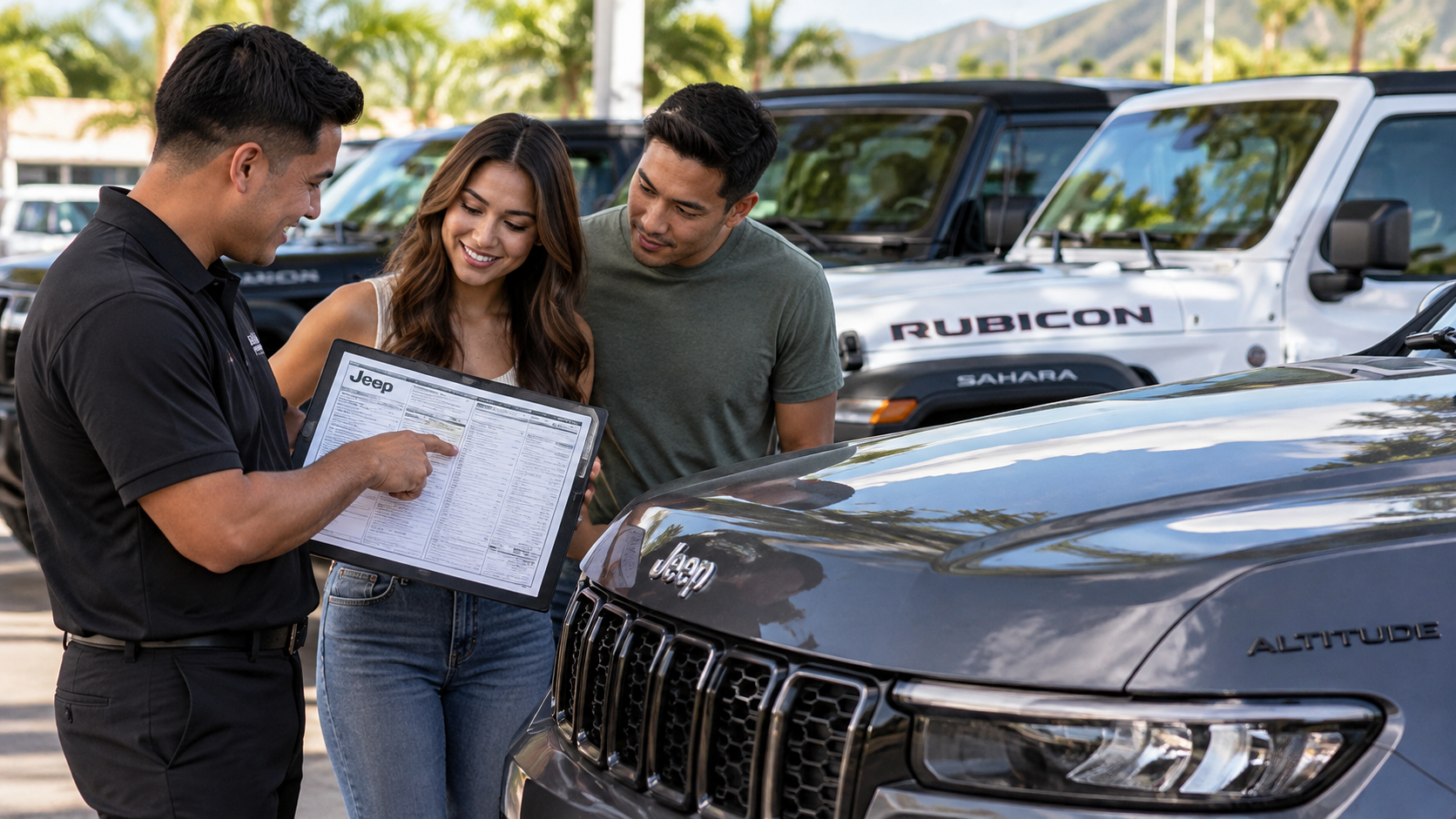
Car trim levels identify different equipment configurations within the same vehicle model. A submodel identifies a particular version of a vehicle, although its precise meaning varies among manufacturers and listing services. These terms help organize choices when you see several vehicles with the same model name. However, a shared model name does not mean every vehicle contains the same features. Seating materials, engines, drivetrain equipment, and technology may differ. Before choosing a vehicle in Pearl City, learn how manufacturers organize these choices and how to verify the equipment. What Car Trim Levels and Submodels Mean A vehicle's make identifies its manufacturer, while its model identifies a specific vehicle line. The trim level provides another layer of information about the equipment configuration. For instance, Jeep is a make, Wrangler is a model, and Sport is a trim name used within the Wrangler lineup. The full vehicle description may also include its model year, body configuration, and drivetrain. What does a trim level tell you? It identifies a named version of the model, usually associated with a particular collection of standard features. Manufacturers use trim names to organize equipment choices across a lineup. However, those names do not follow one universal naming standard. Some trims emphasize interior appointments or technology. Others identify distinctive mechanical equipment or appearance details. Therefore, the equipment list matters more than assumptions about the trim name. A submodel can describe a particular version within a model family. Manufacturers, vehicle databases, and parts catalogs may apply the term to different classification details. For instance, one listing service might classify a body style or drivetrain version as a submodel. Another may organize the same information under trim or configuration fields. Consequently, a submodel label should not replace a review of the actual vehicle specifications. Model year also matters. Manufacturers can change standard equipment, available packages, and trim names between production years. When comparing listings, begin with the make, model, model year, and trim. Then, check the drivetrain, engine, body configuration, and factory equipment. This sequence establishes exactly which version you are evaluating. How Trim Levels Change Standard and Optional Equipment Trim levels group vehicle features into recognizable configurations. However, the contents of each configuration vary by model and production year. Standard equipment comes with a particular configuration without requiring the selection of another factory option. Optional equipment adds features when the manufacturer offers them for that vehicle. A package combines several features into one selectable group. For instance, a technology package may include multiple cameras, upgraded displays, or driver assistance features. Not every package is available on every trim. Some require another feature group or a specific powertrain. When examining a vehicle listing, separate equipment into three categories: Standard trim equipment: Identify the seating materials, infotainment display, wheels, and safety features included with the listed configuration. Available factory options: Check whether the vehicle has the selected equipment, since availability alone does not confirm installation. Equipment packages: Review the exact items within each package and any restrictions tied to the trim or drivetrain. These categories explain why two vehicles with identical trim names can have different equipment. For instance, one vehicle might include an optional audio upgrade while another retains the standard speakers. Both can still carry the same trim designation. Additionally, appearance packages may change wheels, exterior finishes, or interior accents without replacing the underlying trim. Does the highest trim always include everything from lower versions? No. Manufacturers may offer exclusive configurations or restrict certain options to selected trims. Therefore, examine the actual equipment list before treating a higher trim as a complete upgrade. The vehicle's window sticker can provide a useful record of original factory equipment. Compare that information with the listing and the features you can inspect. How Engines Drivetrains and Configurations Differ Trim differences can extend beyond seating surfaces, wheels, and cabin technology. Some configurations also offer distinct engines, driven-wheel arrangements, suspension components, or towing equipment. An engine produces power that travels through the transmission and drivetrain to move the vehicle. Manufacturers may pair specific engines with certain trims or equipment groups. Consequently, two vehicles from the same model family may have different mechanical specifications. A drivetrain identifies how propulsion reaches the wheels. Two-wheel-drive and four-wheel-drive arrangements use different components to transfer torque. Some four-wheel-drive configurations include a transfer case with selectable modes. Others use different hardware and control arrangements. These details matter when evaluating the vehicle's intended driving duties. However, a trim name alone cannot confirm the precise drivetrain components. Suspension equipment also deserves attention. Springs, dampers, and related components control wheel movement and body motion across road surfaces. Manufacturers may use different suspension arrangements within a model lineup. Therefore, verify the installed equipment instead of assuming every trim rides the same way. For RAM shoppers, towing equipment provides another reason to check specifications carefully. Trailer ratings depend on the particular truck's engine, axle, configuration, and other manufacturer-defined factors. A trim badge does not establish a specific towing rating. Similarly, Jeep shoppers should check the exact four-wheel-drive configuration and associated equipment before evaluating its suitability. Dodge and Chrysler shoppers may encounter different seating arrangements or powertrain choices across applicable models and years. The most reliable comparison uses specifications for the individual vehicle, not a broad description of its trim family. How to Compare Vehicle Trim Levels and Packages Once you understand the terminology, compare actual equipment using the same criteria for every vehicle. Begin by selecting the model year and body configuration. Then, identify the trims you want to examine. Why should you compare the same model year? Standard equipment and package availability can change between production years. First, review the manufacturer's specifications for the relevant configurations. Next, examine the window sticker or original equipment documentation for each vehicle. This helps distinguish equipment that comes standard from factory options installed on a specific example. Verify the engine and drivetrain before moving to cabin features. If the vehicle must meet a particular towing or transportation requirement, review the relevant manufacturer specifications. Then, examine seating, climate controls, infotainment, and driver assistance equipment. Check feature availability at the vehicle level. A listing may identify a feature as available without confirming that the individual vehicle contains it. Additionally, note whether your preferred equipment requires an optional package. The package price may change the total cost of a configuration. Compare vehicle prices with the equipment differences in view. A more expensive trim may include several features you will not use. By contrast, a lower trim with the right optional package may contain the equipment you want. Finally, inspect the vehicle in person when possible. A window sticker documents factory equipment, but physical controls and seating arrangements deserve direct examination. A test drive can also clarify differences in seat support, visibility, steering response, and cabin operation. Choosing a Trim Based on Features and Vehicle Fit The most suitable trim is the configuration that meets your transportation needs and equipment preferences. A higher position in the lineup does not automatically make it the better choice. Start by identifying the features you expect to use. Seating capacity, smartphone connectivity, cargo access, and drivetrain equipment may carry different priorities for different households. Next, consider which features are essential and which are optional preferences. This distinction keeps the comparison focused when prices and package combinations change. Before narrowing your selection, use these checks: Confirm your essential equipment. Identify the seating arrangement, drivetrain, safety features, and cabin controls you need, then verify their availability on each vehicle. Examine the complete configuration. Review the model year, trim, engine, factory packages, and window sticker before comparing similarly named listings. Compare equipment against the total price. Check whether an upgraded trim includes features you will use or whether another configuration meets your requirements. Keep notes on the equipment differences that matter to you. This creates a clear comparison when several trims share similar exterior styling. You can explore the new vehicle inventory at Cutter Chrysler Jeep Dodge of Pearl City to review current listings. For model-specific choices, browse available Jeep Wrangler vehicles, Dodge Durango vehicles, and RAM 1500 trucks. Use those listings to identify configurations worth examining. Then, confirm the equipment on each individual vehicle before making your decision. You do not need every available feature to find a suitable vehicle. Focus on the configuration that provides the equipment you want at a price that fits your plans.

11 Things You Must Do During a Test Drive

11 Things You Must Do During a Test Drive

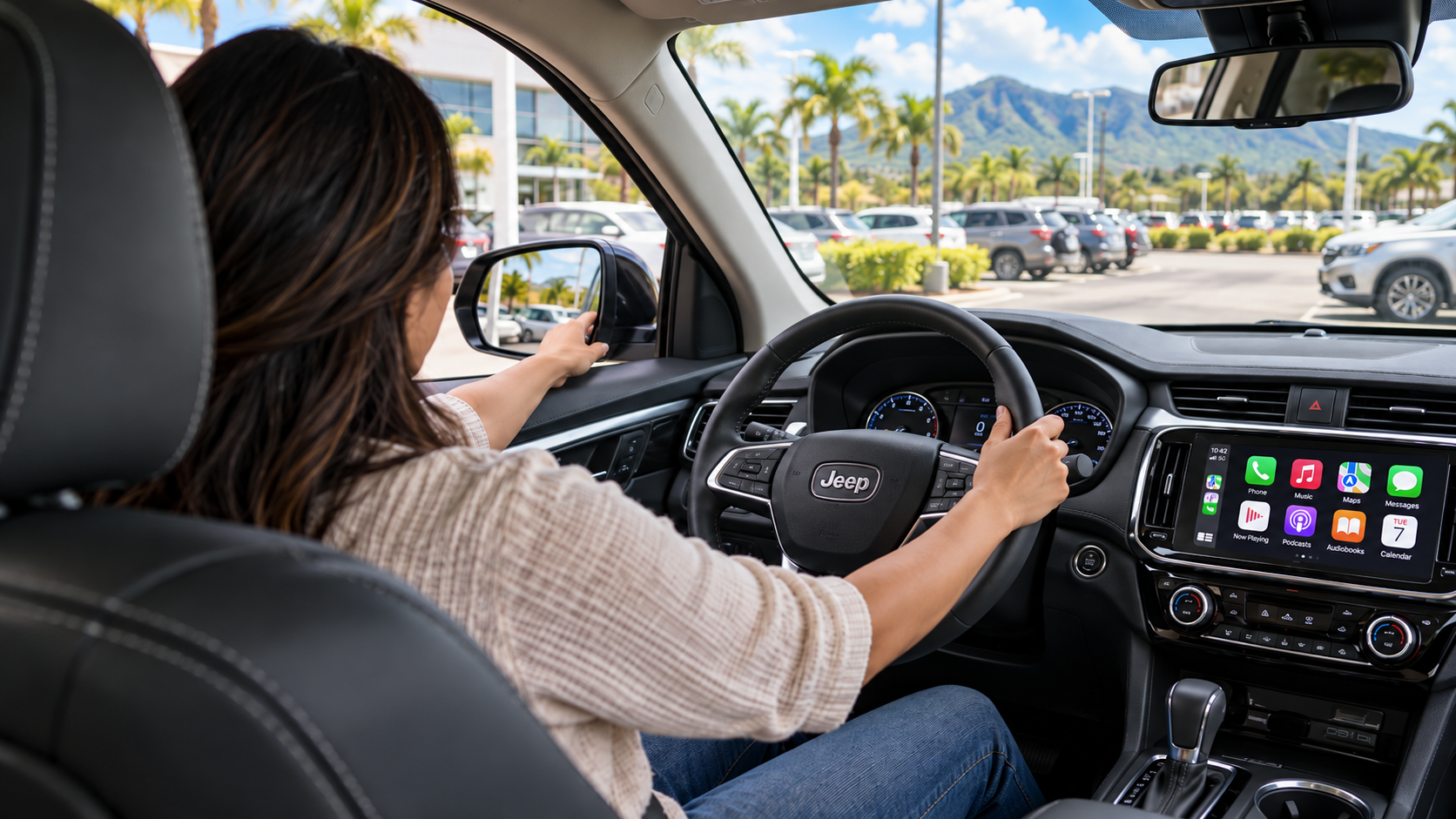
You have found a vehicle that looks promising, but photos and specifications cannot tell you how it feels from the driver's seat. A test drive checklist gives you a consistent way to examine comfort, visibility, driving response, and cabin features before choosing a vehicle. It also provides a fair basis for comparing different cars, SUVs, and trucks. For Pearl City shoppers, that means checking more than acceleration during a quick trip around the block. Seating position, braking response, passenger access, and parking visibility deserve attention. Furthermore, reviewing these details in a familiar order makes it easier to remember what worked and what needs another look. Preparing the Vehicle Before the Test Drive Before starting the engine, take several minutes to adjust the cabin. The driver's seating position establishes the distance to the pedals, steering wheel, and primary controls. What should you check before pulling away? Begin with seat support, visibility, control placement, and the ability to reach the pedals comfortably. A seat should support your back and thighs without restricting movement. Adjust its height and distance until you can press the pedals without stretching. Next, set the steering wheel where your arms remain comfortably bent. Check the view through the windshield and side windows. Roof pillars, head restraints, and mirror placement can create areas that are difficult to see. Therefore, look toward the corners of the vehicle and check your mirrors before moving. Use these three checks before beginning the drive: Set your driving position and mirrors. Adjust the seat, steering wheel, and head restraint, then verify clear views toward adjacent lanes. Locate essential controls. Find the turn signals, windshield wipers, climate settings, hazard lights, and parking controls before entering traffic. Inspect the cabin and instrument display. Check warning indicators, seat belt fit, door operation, and any unfamiliar messages that appear when starting the vehicle. Next, ask about the planned test route. A useful route should provide opportunities for turns, routine braking, parking, and steady cruising. If possible, drive the specific trim and powertrain you intend to purchase. Wheel size, seating equipment, and suspension configurations can change how two versions of the same model feel. Evaluating Acceleration Braking Steering and Ride Comfort Once underway, pay attention to how the vehicle responds to ordinary driving inputs. You do not need aggressive maneuvers to learn whether the steering, brakes, and suspension feel suitable. Acceleration should feel predictable as you enter traffic or increase speed. An automatic transmission should shift without repeated hesitation or unexpected jolts. However, different engines and transmission types may respond differently to the same pedal movement. What should the brakes feel like during a test drive? They should slow the vehicle predictably without unusual pulling, grinding, or persistent vibration. Test ordinary stops in a safe location. Note how much pedal travel is needed and whether the vehicle remains straight during braking. Additionally, listen for noises that merit further questions. Steering deserves equal attention. Turn through several normal intersections and observe how readily the vehicle follows your intended path. Check whether the steering wheel returns smoothly toward center after a turn. The suspension controls body movement as the tires cross uneven pavement. Softer suspension tuning may absorb small bumps differently from firmer tuning. Neither response establishes whether the vehicle suits you without considering your driving preferences. Try a mix of suitable paved streets and steady cruising speeds. At lower speeds, listen for rattles or knocking sounds. At higher permitted speeds, notice tire noise, wind noise, and unwanted vibration. Also, assess parking maneuvers. A tight turning circle and clear sightlines may matter when entering Pearl City parking lots or residential driveways. Finally, think about how the vehicle responds after several minutes behind the wheel. Your first impression may change once you have completed turns, stops, and ordinary cruising. Checking Infotainment Controls and Driver Assistance Features Modern vehicles combine physical controls, touchscreens, cameras, and electronic alerts. These features deserve a separate review because their operation may differ across models and trims. Start while the vehicle is parked. Locate the primary audio, navigation, phone, and climate controls. Then, check whether their arrangement makes sense from your normal seating position. Can you reach frequently used functions without searching through several menus? The answer should come from trying the controls yourself while the vehicle remains stationary. If smartphone integration matters to you, ask whether the vehicle supports your phone and preferred connection method. Check compatibility, pairing steps, and charging access. Climate control also deserves attention in Pearl City. Test the fan, air distribution, and cooling response before leaving the lot. Furthermore, confirm that rear passengers have suitable airflow if the vehicle includes additional seating rows. Driver assistance features require careful evaluation. Available equipment may include blind spot warnings, parking cameras, adaptive cruise control, and lane assistance. These features use sensors and electronic controls to monitor specific driving situations. However, the driver remains responsible for steering, speed, braking, and surrounding traffic. Review available alerts, settings, and camera views with dealership staff. Do not deliberately approach obstacles or create emergency situations to trigger automatic braking. If a vehicle includes a surround-view camera, examine its display while parked. Look at the image clarity and how the camera view relates to the vehicle's position. Before moving on, ask which technology features come with the specific trim. Similar-looking vehicles may have different equipment packages. Evaluating SUV Seating Passenger Access and Cargo Space A vehicle can feel comfortable from the driver's seat while providing insufficient space for everyone else. Therefore, evaluate passenger seating and cargo access before deciding whether the cabin fits your household. Start with the second row. Sit behind the driver's seat after setting the front seat to your normal position. Check knee clearance, headroom, foot space, and ease of entry. For three-row SUVs, inspect how passengers reach the rear seats. Some layouts use a folding bench, while others have separate second-row seats. These arrangements change the path into the third row. How should you evaluate an SUV's cargo space? Examine the opening, floor dimensions, seat-folding arrangement, and remaining storage with passengers seated. Published cargo volume alone cannot confirm whether a stroller, cooler, or sports bag fits. Bring measurements for larger items or ask to test the available space. Additionally, check whether the rear seats fold easily. A split-folding arrangement may preserve passenger seating while making room for longer belongings. For families using child safety seats, identify the manufacturer's approved restraint positions. Check the relevant anchors and seat belt arrangements. Consult both the vehicle manual and child restraint instructions before installation. Door openings also deserve attention. Observe whether passengers can enter comfortably when another vehicle occupies the adjacent parking space. In a RAM truck, extend the same evaluation to rear cabin access and any storage compartments. For a Jeep SUV, check the seating and cargo layout of the specific configuration. These inspections reveal whether the vehicle meets your transportation needs beyond the driver's seat. Comparing Your Test Drive Findings Before Choosing a Vehicle After returning to the dealership, record your observations while they remain fresh. Different vehicles may feel appealing for different reasons, but a consistent evaluation makes comparisons clearer. Start by separating personal preferences from concerns that need clarification. Seat firmness may be a preference, while a recurring warning light requires an explanation. Before making your decision, use these questions to review the drive: Did the vehicle fit your driving needs? Review seating comfort, visibility, steering response, braking, parking, and road noise across the route. Did the cabin accommodate your passengers and belongings? Recheck rear-seat access, cargo arrangements, climate controls, and frequently used storage areas. What still needs clarification? Ask about unusual noises, unfamiliar alerts, optional equipment, maintenance records, and warranty coverage where applicable. Consider whether you drove the same configuration you intend to purchase. A model with different tires, seats, or drivetrain equipment may warrant another drive. For a used vehicle, ask about its maintenance history and any inspection findings. A test drive provides useful observations, but it cannot replace a mechanical inspection. For new vehicles, compare the listed equipment and available packages carefully. Make sure the controls and cabin features you evaluated match the vehicle under consideration. At Cutter Chrysler Jeep Dodge of Pearl City, you can explore the new vehicle inventory and used vehicle inventory before selecting models to evaluate. You can also schedule a test drive to arrange a closer look at a vehicle. If you are reviewing purchase costs, the dealership's financing resources provide another place to begin. Your final decision should reflect what you observed from behind the wheel and throughout the cabin. Choose a vehicle that meets your seating needs, responds predictably, and feels suitable on the roads you expect to travel.

Condensation Inside Car Windows and How to Stop It

Condensation Inside Your Car Windows? Here's How To Stop It

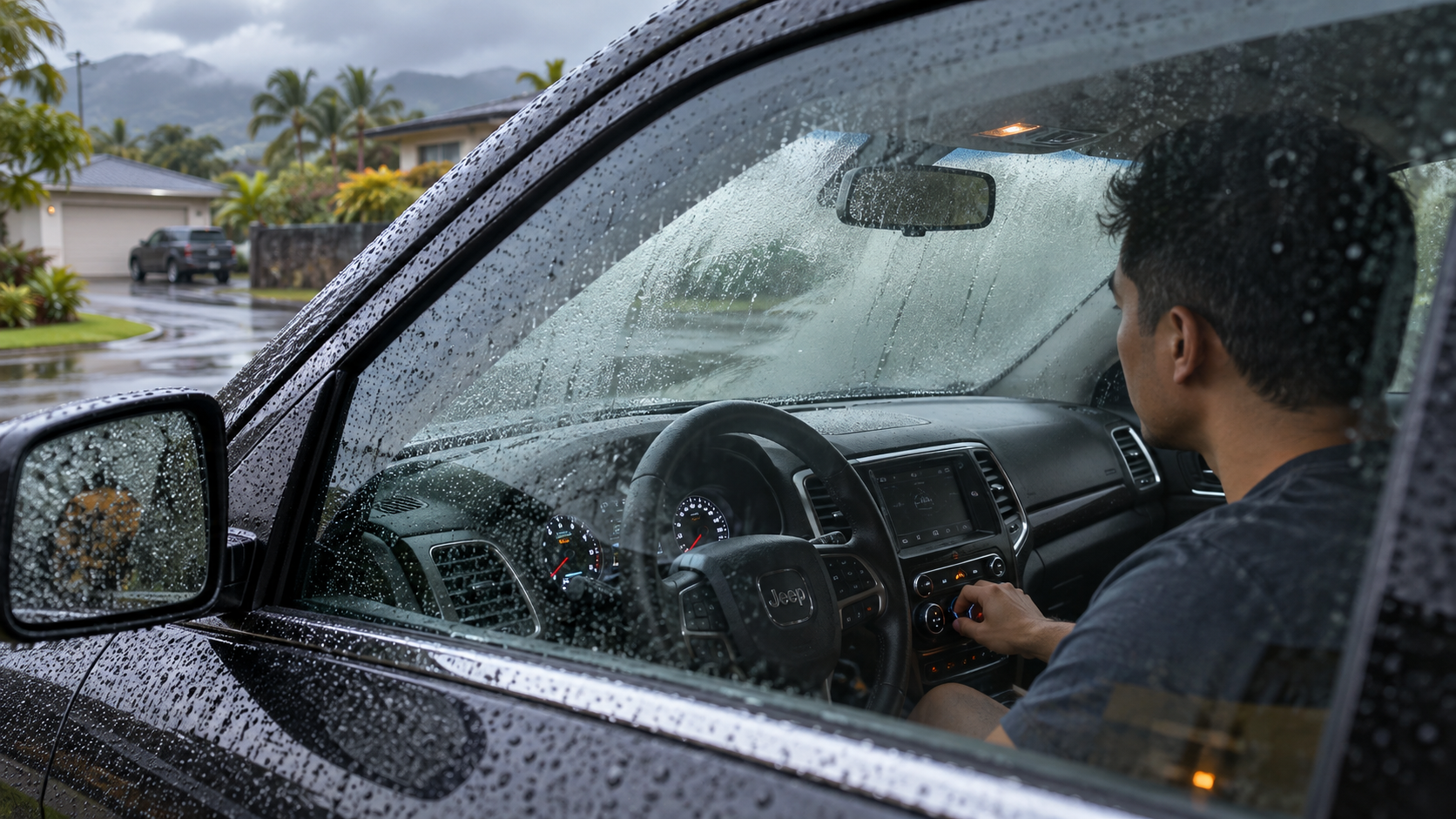
Condensation inside car windows forms when humid cabin air touches glass cool enough to turn water vapor into droplets. This moisture can cloud the windshield and side windows, making surrounding traffic harder to see. However, clearing the glass requires more than wiping away visible droplets. Drivers also need to remove excess moisture from the cabin air. Why does condensation return after the windows clear? Damp carpeting, wet belongings, passenger breathing, and restricted ventilation can keep moisture circulating inside the cabin. Understanding these sources gives Pearl City drivers a clearer way to restore visibility and prevent recurring fog. Why Condensation Forms on the Inside of Car Windows Warm air can hold more water vapor than cooler air. When humid air touches a sufficiently cool window, its temperature may fall below the dew point. Consequently, water vapor changes into liquid droplets on the glass. Inside a vehicle, several moisture sources contribute to this process. Passengers release water vapor while breathing. Wet umbrellas, damp shoes, and soaked floor mats introduce additional moisture. Temperature differences also matter. A windshield may cool overnight while moisture remains trapped inside the passenger compartment. Therefore, fog can appear before anyone starts the engine. Rain can contribute indirectly when occupants bring wet belongings into the cabin. Water entering through damaged seals can also collect beneath carpeting or interior trim. Why does the windshield sometimes fog while the side windows remain clear? Airflow, glass temperature, and moisture distribution differ throughout the cabin. The windshield may receive less drying airflow before the climate controls start. Side glass can also cool at different rates because of its position and surrounding surfaces. Dirty interior glass creates another concern. Fingerprints, dust, and oily residue leave deposits that make moisture more visible and harder to clear evenly. However, cleaning removes the deposits, not the moisture source. Drivers should address both the glass surface and the cabin humidity. For vehicles used around Pearl City, humid outside air adds another factor. Even a dry cabin can develop fog when glass temperature and moisture levels reach the dew point. How to Clear Condensation Inside Car Windows Safely The windshield defogger directs airflow toward the glass to remove moisture and restore visibility. Air conditioning also removes water vapor as cabin air passes across its cooling components. What should you do when interior fog blocks your view? Stop in a safe location if visibility becomes insufficient, then adjust the climate controls before continuing. Use the following sequence to clear interior condensation: Select the windshield defrost setting. This directs airflow toward the windshield, where moving air carries moisture away from the glass. Turn on air conditioning and use fresh-air ventilation. Air conditioning removes moisture from circulating air, while fresh-air mode reduces the buildup of humid cabin air. Adjust the temperature and fan speed. Warm airflow can raise the glass temperature, while a higher fan speed increases the amount of air reaching the windshield. These adjustments work together. Air conditioning reduces moisture in the air, while warmer airflow changes the glass temperature and encourages evaporation. The vehicle's automatic defrost setting may select several controls at once. However, manual settings vary among Chrysler, Dodge, Jeep, and RAM vehicles. Check the owner's manual for the proper defrost procedure. Additionally, use the rear window defogger when equipped and when moisture covers the rear glass. Recirculation deserves attention because it restricts outside airflow. With passengers inside, continued recirculation may retain moisture from breathing and damp clothing. Instead, fresh-air mode provides a path for exchanging cabin air. Slightly opening a window can also release humid air when outside circumstances permit. Avoid trying to clear a heavily fogged windshield while continuing to drive with obstructed visibility. Also, rubbing the glass with clothing can leave streaks that interfere with nighttime visibility. A clean microfiber cloth may remove remaining droplets after parking safely. Still, ventilation and moisture removal address the underlying problem more effectively. Preventing Window Condensation While Your Car Is Parked A parked vehicle can retain moisture for hours after passengers leave. Damp fabrics and carpeting gradually release water vapor into the enclosed cabin. As the temperature of the windows changes, that trapped moisture may form droplets on the glass. Consequently, condensation can develop overnight even without additional rain entering the vehicle. How can you reduce window condensation while parked? Remove wet materials, dry damp surfaces, and limit water entering the cabin. Start with umbrellas, towels, shoes, and floor mats. These objects can hold moisture long after their surfaces appear dry. Rubber floor mats may protect underlying carpeting from some water, but moisture can collect beneath them. Therefore, lift the mats periodically and check whether the carpet feels damp. Dry wet fabric thoroughly before returning it to the cabin. If water has reached the carpet padding, surface drying alone may leave moisture beneath the visible material. Parking under shelter can reduce direct rain exposure. However, a garage or car cover cannot remove moisture already trapped inside the passenger compartment. Interior glass cleaning also supports clearer visibility. Use a suitable automotive glass cleaner and a clean microfiber cloth to remove films and fingerprints. Small automotive moisture absorbers may collect limited amounts of humidity while parked. However, they cannot correct leaking seals, standing water, or a malfunctioning ventilation component. For Oahu drivers, parking with windows closed remains necessary when rain or security concerns prevent safe ventilation. Focus on removing wet belongings and drying the cabin before leaving the vehicle. Finding the Source of Recurring Interior Window Condensation Occasional fogging may result from ordinary cabin humidity. However, recurring condensation accompanied by damp carpeting or persistent odors deserves closer inspection. Water can enter through damaged door seals, window seals, or other openings. Blocked drainage passages may also allow water to collect in areas that should remain dry. Why does condensation keep returning even after the cabin has been cleaned? Hidden water, restricted airflow, or a heating component fault may continue introducing moisture. Inspect the following warning signs before assuming the problem is ordinary humidity: Damp carpeting or musty odors may indicate trapped water beneath floor mats or interior trim. Check the cabin after rain and inspect areas near doors and the cargo floor. Weak airflow from the windshield vents may indicate a restricted cabin air filter, blower fault, or ventilation concern. Compare airflow across fan settings and defrost outlets. A sweet odor, greasy windshield film, or unexplained coolant loss may indicate a heater core leak in applicable vehicles. Have a qualified technician inspect the cooling and heating components. These signs require different diagnostic steps. A water leak calls for checking seals and drainage paths, while weak airflow requires examining ventilation components. A heater core transfers heat from engine coolant into cabin air on vehicles using that heating arrangement. If coolant escapes, moisture and residue may reach the passenger compartment. Consequently, repeated glass cleaning will not correct the underlying leak. Similarly, a moisture absorber cannot repair a blocked drain or defective seal. Avoid opening pressurized cooling components while the engine is hot. An inspection by a qualified technician can identify the source and establish the necessary repair. Keeping Car Windows Clear Around Pearl City Clear windows require moisture control, effective ventilation, and attention to recurring warning signs. For Pearl City drivers, cabin humidity can remain high even after the outside rain stops. A short drive may not fully dry wet carpeting. Therefore, remove moisture sources before parking and check whether damp areas remain after several hours. Use the defogging controls whenever visibility begins to decline. Additionally, inspect the interior glass for residue that can make condensation harder to clear. Drivers should also distinguish interior fog from exterior moisture. If condensation forms outside the windshield, exterior airflow and glass temperature require a different response. Windshield wipers can clear exterior droplets, but they cannot remove moisture from the inside surface. Confirm where the fog has formed before choosing the clearing method. Persistent interior moisture may warrant a professional inspection. The service department at Cutter Chrysler Jeep Dodge of Pearl City can assess ventilation concerns and possible water entry. You can also schedule a service appointment when unexplained dampness or weak defogging airflow continues. Before your next drive, check that the glass is clear and the defogger directs air where needed. If moisture keeps returning, finding its source will do more than wiping the windows again.

Chrysler Pacifica Pearl City for Everyday Family Life

Chrysler Pacifica Pearl City for Everyday Family Life

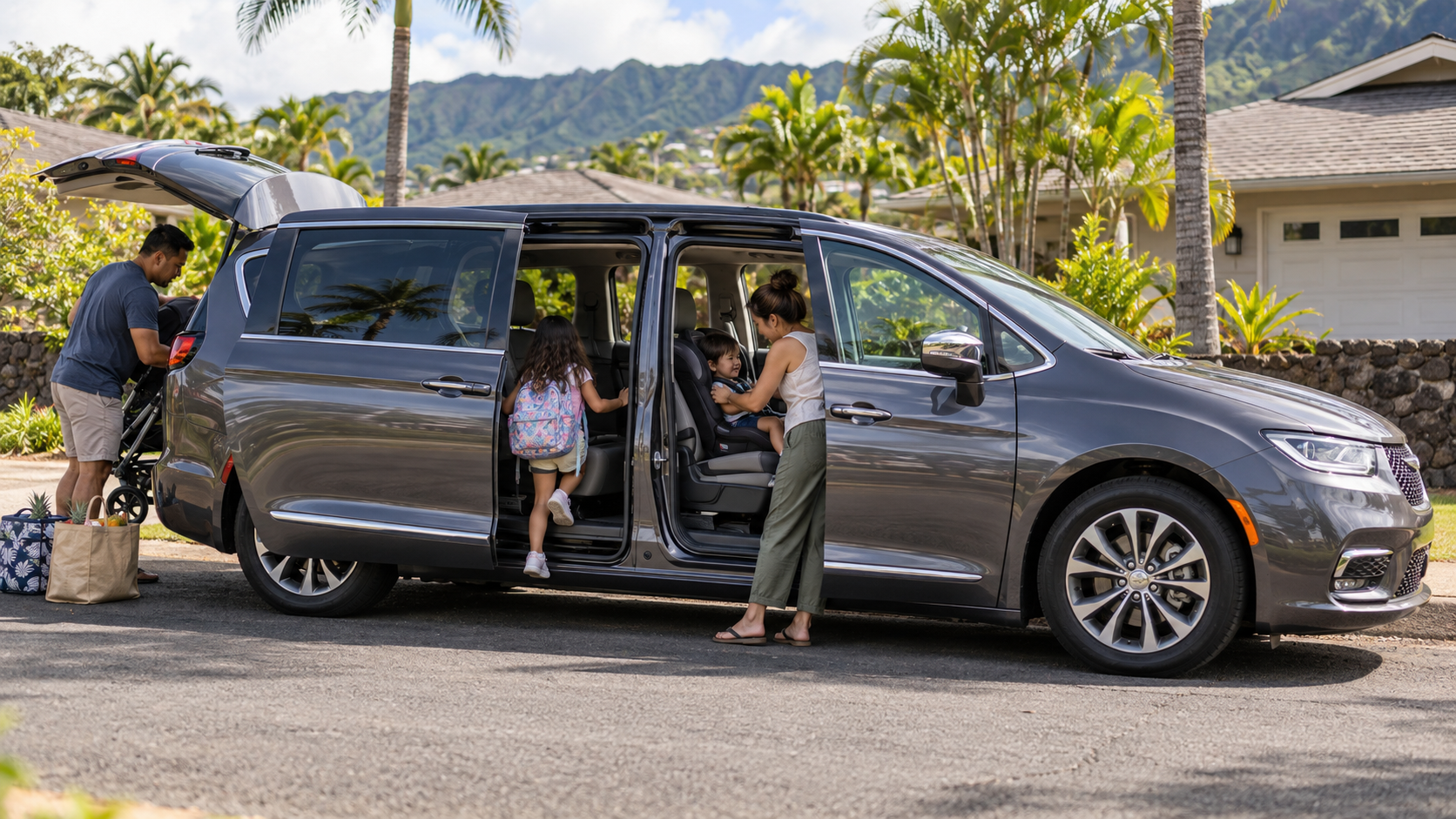
A Chrysler Pacifica in Pearl City can handle much more than the drive between school, home, and the grocery store. Family schedules often involve several stops, changing passenger needs, and plenty of belongings. The right seating arrangement can make those routines easier to manage. Sliding doors, adaptable storage, and accessible cabin features give families several ways to organize their day. However, not every Pacifica has the same equipment. Understanding those differences matters when comparing model years, trims, and gasoline or plug-in hybrid versions. Here's how to evaluate the Pacifica around the activities your household already enjoys. Make School Drop-Offs and Passenger Loading Easier School mornings often begin with backpacks, lunch boxes, and children entering from different sides of the vehicle. The Pacifica's sliding side doors provide wide openings for passenger access. Unlike conventional hinged doors, they slide along the vehicle's body instead of opening outward. This arrangement is useful in crowded Pearl City parking areas. Children can enter without needing the same side clearance as a traditional swinging door. Available power sliding doors also permit operation through vehicle controls or the key fob. How does this change the morning routine? Parents can organize loading around each child's usual seating position. Younger passengers may need help securing restraints, while older children can reach their seats independently. Before purchasing, test the second-row access with the doors fully open. Walk through the process of entering, sitting, and reaching the third row. Consider these everyday loading details: Sliding-door clearance: Check how passengers enter when another vehicle occupies the neighboring parking space. Second-row access: Confirm that each passenger can reach their seat without climbing across another person's belongings. Third-row entry: Test the available seat movement and access path with your family's usual seating arrangement. Some configurations provide features that simplify access to the third row. However, seat movement and equipment vary by model year and trim. Review the actual vehicle instead of assuming every Pacifica has identical controls. Arrange Car Seats and Passenger Seating Around Your Family Passenger capacity is only one part of choosing a family minivan. The placement of car seats, booster seats, and adult passengers matters just as much. Many Pacifica configurations seat seven people with second-row captain's chairs. Certain gasoline configurations offer eight-passenger seating. However, specific layouts vary across model years and trims. Families should inspect the exact seating arrangement before making a decision. For example, two child restraints may occupy most of the second row. That placement can change how easily another passenger reaches the third row. The appropriate restraint installation also depends on the seating position, vehicle manual, and child-seat manufacturer's instructions. The Chrysler Pacifica's available seating arrangements can accommodate different household needs. Still, no seating capacity figure guarantees that every combination of child restraints will fit. When comparing vehicles, review these items: Child-restraint installation: Verify approved seating positions, accessible anchors, and proper installation using both manufacturers' instructions. Passenger space: Sit in the second and third rows to evaluate legroom, headroom, and access with the intended seating arrangement. Daily seat movement: Practice reaching the third row without disturbing an installed child restraint. These checks matter for families transporting children of different ages. A seat arrangement that works with one booster may not suit another restraint. Parents should also confirm that children remain in age- and size-appropriate restraints according to applicable guidance. A dealership visit offers an opportunity to examine the exact vehicle configuration before committing. You can explore Chrysler Pacifica options in Pearl City and compare the available layouts. Make Room for Groceries, Strollers, and Family Gear A family vehicle needs space for more than passengers. Groceries, sports bags, beach supplies, and strollers often compete for the same cargo area. The Chrysler Pacifica offers a rear cargo compartment behind its third-row seating. Families can use this space for everyday bags without changing the passenger arrangement. When larger items need transportation, folding seats can open additional cargo room. Gasoline Pacifica models offer Stow 'n Go seating on applicable seating rows and configurations. This feature lets designated seats fold into compartments beneath the floor. The third-row seating can also fold to create a larger cargo area. Second-row Stow 'n Go availability depends on the model and equipment. Older Pacifica Plug-in Hybrid versions use a different second-row arrangement because their battery occupies part of the underfloor space. Their second-row seats do not fold into the floor like equipped gasoline versions. That distinction is important when comparing used Pacifica models. Imagine a morning grocery run with children occupying the second row. You can place groceries behind the third row without moving passenger seats. Later, transporting a large stroller or sports equipment may call for additional cargo room. Folding compatible seats can accommodate larger items when those seats are unoccupied. Before selecting a Pacifica, test these common family tasks: Stroller storage: Place your actual stroller in the cargo area with the family's usual seats occupied. Grocery loading: Check whether bags remain accessible without stacking items where they could fall onto passengers. Cargo reconfiguration: Practice folding the appropriate seats and returning them to their original positions. A power liftgate, where equipped, may simplify cargo access when your hands are full. However, it does not replace checking the available storage dimensions. The best cargo arrangement is one your family can use without repeatedly moving child seats. Keep Everyone Comfortable During Oahu Errands Family travel around Oahu may include school pickups, appointments, shopping centers, and weekend visits. Even shorter trips can involve several passengers with different comfort needs. The Pacifica offers cabin features that deserve a closer look during these routines. Climate controls are an important starting point. Available rear climate settings let passengers receive airflow without relying entirely on adjustments from the front seats. Before purchasing, sit in the rear rows and examine the ventilation outlets. Confirm which controls are available to passengers in that specific vehicle. Technology also plays a role during family travel. Available FamCAM equipment displays camera views of rear seating areas on the front touchscreen. This can make it easier to check on children without turning around. Drivers should still keep their attention on traffic and use the display only when safe. Some Pacifica models also offer rear entertainment screens, smartphone connections, and multiple device-charging ports. These items vary by model year, trim, and installed equipment. Check the actual touchscreen menus and ports instead of relying only on an online feature list. Family members learning to drive may have additional priorities. The Pearl City article on vehicles for newer drivers covers several relevant vehicle considerations. For the Pacifica, examine available driver-assistance equipment, mirror visibility, and parking-camera views during a test drive. Driver-assistance features provide supplemental alerts or assistance, but drivers must continue monitoring surrounding traffic. The goal is to find cabin equipment that fits the way your family travels each week. Choose a Chrysler Pacifica That Fits Your Household The final step is matching a Pacifica's equipment to your family's regular activities. Seating layout, passenger access, cargo arrangements, and cabin technology deserve attention during a vehicle comparison. Start by identifying which features your household will use most often. A family transporting several young children may prioritize car-seat access and second-row space. Another household might need flexible cargo storage for beach equipment or sports activities. Gasoline and plug-in hybrid versions also require separate consideration. The gasoline Pacifica offers available all-wheel drive on applicable models and configurations. Older Plug-in Hybrid versions use a different powertrain and require charging to maximize electric driving. If you're considering a used Pacifica Plug-in Hybrid, compare your daily travel with its available electric range. Then check whether convenient charging fits your household routine. The dealership's existing guide to Pacifica Hybrid efficiency and daily driving costs in Hawaii explains this consideration in greater detail. For a general family-use comparison, concentrate on the vehicle's actual seating and equipment first. Bring your family along when possible. Check the sliding doors, install compatible child restraints correctly, and test cargo loading with familiar belongings. Then evaluate the driver's seating position, mirrors, and available parking assistance during a test drive. Compare the available Pacifica models using the features you verified in person. Avoid paying more for equipment that does not serve your family's routine. At Cutter Chrysler Jeep Dodge of Pearl City, shoppers can explore Chrysler vehicles and review available configurations. You can also browse used vehicles in Pearl City when considering older Pacifica models. A Chrysler Pacifica in Pearl City should fit the people and activities that fill your typical week. Sliding doors can simplify passenger loading, while adaptable seating and storage support changing plans. Carefully reviewing the model year and equipment will clarify which features are present. Visit Cutter Chrysler Jeep Dodge of Pearl City to see how a Pacifica fits your family's everyday needs.

Used Trucks for Sale Oahu and What to Inspect First

Used Trucks for Sale Oahu and What to Inspect First

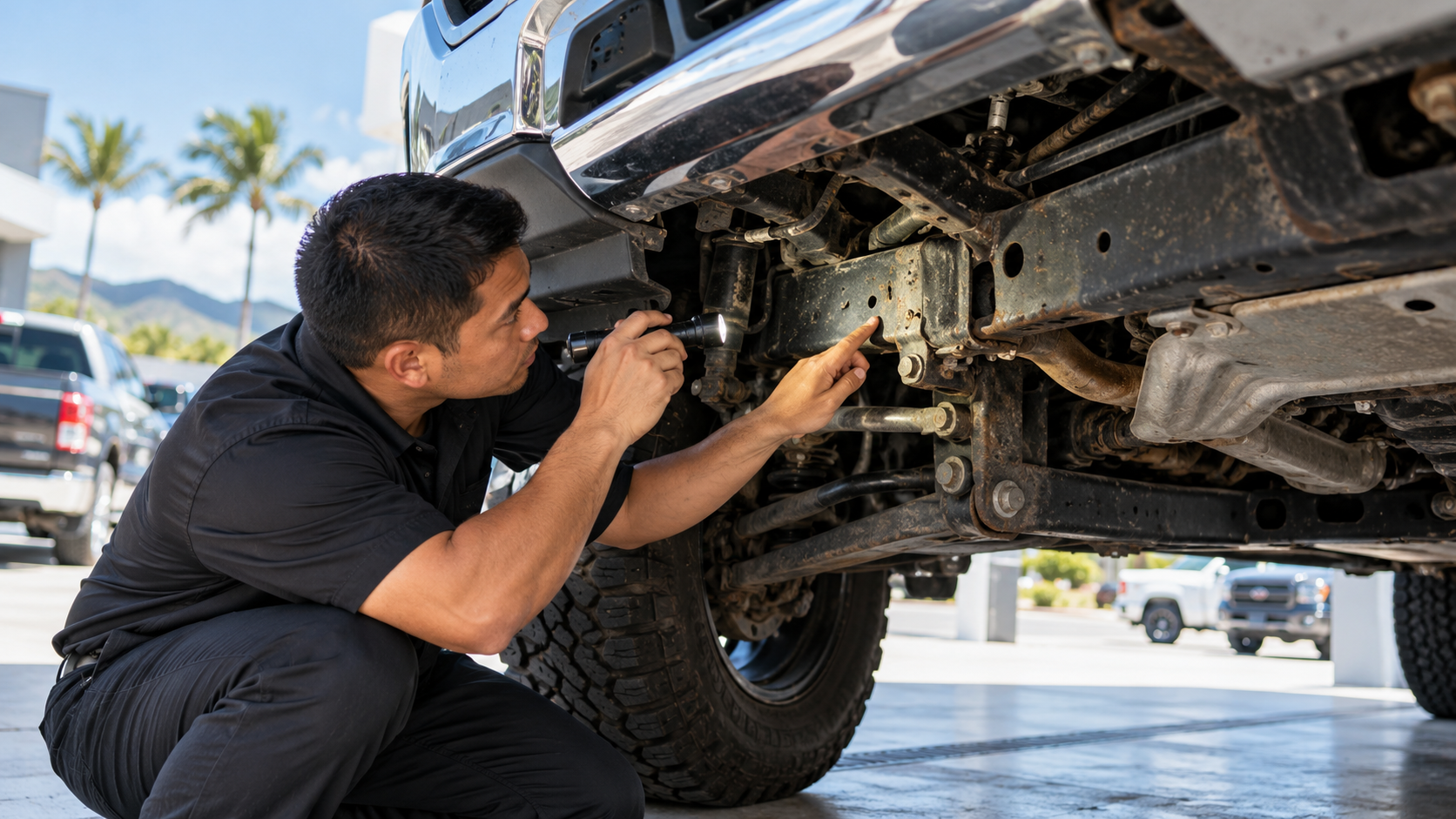
When comparing used trucks for sale on Oahu, the asking price and odometer reading only tell part of the story. A pickup may have spent years commuting, carrying equipment, towing trailers, or traveling across uneven terrain. Each use places different demands on its mechanical components. Therefore, a careful inspection should explore the truck's current condition and previous maintenance. Whether you're considering a Ram 1500, Jeep Gladiator, or another pickup, knowing what to inspect makes comparing vehicles easier. Here's how to examine a used truck before deciding whether its asking price makes sense. Check the Truck Frame and Undercarriage A truck's frame provides structural support for its body, suspension, and attached equipment. Damage underneath the vehicle may remain difficult to spot during a quick walk around the lot. Therefore, an undercarriage inspection deserves attention before you commit to purchasing. Start by looking for corrosion, bent metal, damaged mounting points, and signs of previous repairs. On Oahu, coastal moisture and salt exposure warrant particular attention. However, surface rust alone does not establish that a frame has structural damage. A qualified mechanic can distinguish minor corrosion from deterioration that requires repair or further examination. When reviewing used trucks for sale on Oahu, inspect these areas carefully: Frame rails and crossmembers: Look for substantial corrosion, cracking, unusual welds, or metal that appears bent or distorted. Suspension mounting points: Check for damaged brackets, loose components, and corrosion around attachment areas. Undercarriage and fluid lines: Examine visible brake lines, fuel lines, protective covers, and areas showing fresh fluid residue. A truck may look clean above its wheels while needing attention underneath. Moreover, recent undercoating or unusually fresh paint deserves a closer look when other damage signs are present. For questionable findings, request an independent inspection before making your final decision. The inspection should document the concern and explain any recommended repairs. Review Towing History and Suspension Wear Previous towing and hauling are important considerations when examining a used pickup. Carrying heavy equipment or pulling trailers can place additional demands on tires, suspension components, brakes, and drivetrain parts. However, the presence of a trailer hitch does not prove the truck was frequently used for heavy towing. Likewise, a clean truck bed cannot establish that the vehicle carried light loads throughout its life. Look for evidence across several areas instead of relying on one visible detail. Start with the hitch receiver, trailer wiring, and surrounding attachment points. Check for damage, loose wiring, unusual repairs, or severe corrosion. Then examine the rear suspension for worn bushings, leaking shocks, and damaged mounting hardware. Tire wear may also reveal issues with inflation, suspension geometry, or previous maintenance. However, uneven tread patterns require diagnosis before assigning a specific cause. The Ram 1500 provides a useful example because available drivetrains and equipment vary between configurations. Two trucks from the same model year may have different towing ratings and mechanical specifications. A Jeep Gladiator may require additional attention around its four-wheel-drive components and any aftermarket off-road equipment. Ask the seller about previous towing, scheduled maintenance, and major repairs. Compare those answers against available service records. A complete inspection should focus on what the truck needs today, not assumptions about how a former owner drove. Test the Engine, Transmission, Brakes, and Steering A test drive reveals how the truck responds during acceleration, braking, steering, and low-speed maneuvering. Start with a cold engine when possible. Listen for unusual knocking, prolonged rattling, or irregular idle sounds. Check the dashboard for warning indicators that remain illuminated after startup. During acceleration, the transmission should shift according to its normal operating characteristics. Harsh jolts, unexplained hesitation, or unusual noises deserve further investigation. Test the steering at different speeds where traffic and road safety permit. Watch for pulling, excessive vibration, or unusual looseness. Braking deserves separate attention. A truck should stop smoothly without strong pulling, grinding sounds, or abnormal pedal response. For additional guidance, Pearl City shoppers can review the dealership's article about questions to ask before a test drive. Use this checklist during your inspection: Engine and transmission: Listen for unusual sounds, observe warning lights, and note delayed or harsh shifting. Brakes and steering: Watch for vibration, pulling, grinding, and changes in steering or pedal response. Four-wheel-drive equipment: Verify equipped drive modes engage according to the owner's manual without unusual noises. A short drive cannot uncover every mechanical concern. Therefore, arrange a qualified inspection when symptoms appear or maintenance records raise questions. Pearl City drivers can also review the dealership's brake service information to learn about available inspections and repairs. The goal is to identify repair needs before they become unexpected expenses. Verify Maintenance Records and Truck Equipment What should you look for in a used truck's paperwork? Start with the vehicle identification number, service history, title information, and available accident records. A vehicle history report may contain ownership changes, reported collisions, mileage records, and title events. However, not every repair or maintenance visit appears in these reports. That makes current mechanical inspection equally important. Compare the truck's odometer reading with recorded service dates. Look for documented oil changes, fluid servicing, brake work, tire replacement, and major repairs. For a Ram pickup, verify the engine, drivetrain, axle configuration, and factory towing equipment. These details may change the truck's towing rating and suitability for your intended loads. Similarly, Jeep Gladiator shoppers should inspect four-wheel-drive equipment and any modifications. Aftermarket suspension or tire changes warrant a closer mechanical review. Do not assume a vehicle's advertised towing capacity applies to every configuration. Confirm the exact specifications using manufacturer information and the vehicle's identifying details. You can explore additional purchase documentation in Cutter's guide to what to check before buying a used vehicle. Before moving forward, verify three things: Vehicle history: Compare ownership records, reported damage, and mileage information against the seller's disclosures. Maintenance documentation: Review available records for major services, recurring repairs, and overdue maintenance. Equipment and specifications: Confirm the truck's drivetrain, installed towing hardware, and vehicle-specific ratings. A used truck inspection checklist should combine documents with physical findings. Neither source replaces the other. When necessary, the dealership's Pearl City service department can provide information about maintenance and inspection services. Decide Whether the Asking Price Makes Sense Used trucks for sale on Oahu can differ considerably in mileage, condition, equipment, and maintenance history. A lower asking price may look appealing initially. However, upcoming repairs can change the financial picture. Begin by comparing trucks with similar model years, engines, drivetrains, trim levels, and mileage. For example, a Ram 1500 with different towing equipment may not provide a direct comparison. Then account for tire replacement, brake repairs, fluid servicing, or other work identified during inspection. Request written repair estimates whenever a mechanical concern requires attention. Those figures give you a clearer basis for comparing vehicles. Local pricing also deserves consideration. Inventory availability and market demand can produce different asking prices across locations. The dealership's guide to buying a truck in Hawaii provides additional information about registration, financing, and dealership purchasing steps. Beyond the advertised price, review taxes, applicable government fees, financing terms, and optional products. Compare the total purchase amount, not just the monthly payment. The Pearl City finance department offers information about financing and preapproval options. Once you understand the expected costs, compare your options against your actual driving needs. A pickup intended for daily commuting may have different priorities from one intended for frequent towing. Evaluate those requirements before paying extra for equipment you may seldom use. You can browse used vehicle inventory in Pearl City to compare available pickups and other pre-owned vehicles. The right used truck is one whose condition, equipment, records, and price withstand careful review. Take your time with the inspection and ask questions whenever something seems unclear. Cutter Chrysler Jeep Dodge of Pearl City can assist with vehicle information and the next steps in your purchase.

used car dealer near me

Used Car Dealer Near Me and What to Check Before Buying

A used car dealer near me should make it possible to review more than the vehicle sitting on the lot. History, warranty terms, current condition, recalls, and final transaction figures all deserve separate attention. Therefore, a careful purchase starts with written information and then moves into a physical review. A test drive adds another layer because it shows how the vehicle responds on the road. The final step is making sure the price, financing, and paperwork all match what you agreed to. Start With the Vehicle and Written Disclosures What should you expect from a used car dealer near me before committing? You should be able to review the vehicle, its disclosures, and the transaction details before signing. Therefore, start with the Buyers Guide and the basic vehicle information. The Buyers Guide explains whether the vehicle carries warranty coverage or is sold as is. In addition, it provides written terms that should match what you hear during the sale. Keep a copy with your records after purchase. Next, review the mileage, trim, major equipment, and visible wear. Those details establish the vehicle you are evaluating before pricing or financing enters the discussion. However, they do not tell you everything about its past. A used car dealer near me should also provide enough time to inspect the vehicle before you commit. Check the exterior, interior, tires, lights, glass, and controls. Therefore, any questions can be raised before paperwork begins. History Reports and Inspections Serve Different Purposes Does a clean vehicle history report mean the car needs no inspection? No. A history report shows recorded events, while an inspection checks the vehicle as it sits today. A report may show title data, reported collisions, prior owners, and recorded mileage. However, not every repair or maintenance event appears in those records. Therefore, a clean report should not replace a physical review. An inspection can reveal tire wear, fluid leaks, brake concerns, worn suspension parts, or other present issues. In addition, it can show whether prior repairs appear complete and secure. That makes the inspection useful even when the history looks clean. Before committing, compare three sources of information. Review the Buyers Guide so warranty or as is terms are clear in writing. Review the history report for title records, reported damage, ownership, and mileage information. Review the current mechanical state through inspection so present concerns are not hidden by past records. A used car dealer near me should make these checks easy to discuss. Therefore, ask about anything that does not match across the records and the physical vehicle. What to Check During a Used Vehicle Test Drive What should you check during a used vehicle test drive? Focus on steering, braking, power delivery, noise, vibration, visibility, and controls. Each area can reveal something that a parked inspection cannot. Start slowly and listen for unusual noises as the vehicle begins moving. In addition, watch the dashboard for warning lights that stay illuminated. Steering should respond cleanly without pulling or unusual vibration. Next, test the brakes with normal pressure. The vehicle should stop in a straight line without strong vibration or grinding sounds. Therefore, any change in pedal feel deserves a closer look. During acceleration, pay attention to transmission response and engine smoothness. Shifts should occur without harsh jolts or long delays. In addition, test visibility through the windshield, mirrors, and rear glass. A used car dealer near me should give you time to drive on roads similar to your routine. Use that time to check parking, turning, merging, and low speed control. Therefore, the test drive becomes a vehicle review, not a quick lap around the block. Verify Recall Status and Current Mechanical State How do you know whether the vehicle has an open recall? Use the 17 character VIN to check recall status before taking delivery. Recall information belongs to the exact vehicle, not the model name alone. Moreover, the VIN can be found near the lower windshield on the driver side. It also appears on registration paperwork and the driver door label. Therefore, use the full VIN when checking recall records. An open recall does not automatically mean the vehicle has a current mechanical problem. It means a manufacturer campaign remains open for that VIN. In addition, the repair path can vary by campaign. Additionally, current mechanical state still needs separate attention. Tires, brakes, fluids, battery health, warning lights, and visible leaks should be reviewed. Therefore, recall status and inspection should remain two different checks. A used car dealer near me should be able to discuss what has been inspected or repaired before sale. Ask what work has already been completed. In addition, ask whether any open recall requires a separate appointment. Review Price Financing and Paperwork Before Signing What should be clear before you sign the final paperwork? The sale price, APR, loan term, fees, optional products, warranty terms, and total cost should all be visible. Therefore, review each figure before focusing on the monthly payment. A lower payment can come from a longer loan term. That can increase the total amount of interest paid. In addition, optional products can raise the financed amount even when the vehicle price stays the same. Moreover, ask for a full breakdown before signing. Compare the sale price with the amount financed and the total of payments. Therefore, you can see where taxes, fees, trade value, down payment, and optional products appear. Before committing, review these final items: Confirm the sale price and make sure it matches the number discussed before financing. Review APR and loan length together so the monthly payment does not hide a higher total borrowing cost. Check every optional product and fee so you know which items are required and which are elective. Cutter Chrysler Dodge Jeep of Pearl City can walk through used inventory and transaction details before you decide. Bring your questions, review the records, and take time with the test drive. Then read the final paperwork carefully so the vehicle, price, and terms all match what you agreed to.

dodge charger honolulu

Dodge Charger Honolulu for Daily Driving in Pearl City

Dodge Charger Honolulu shoppers may consider when one car needs to handle commuting, errands, and stronger acceleration. The best fit starts with engine choice, fuel use, drivetrain, and the roads you travel most. However, the current Charger offers several ways to balance those priorities. R/T provides strong output with a lower power level than Scat Pack. Therefore, the daily decision should focus on what you want the car to do every week. Charger as a Daily Vehicle in Pearl City Is Dodge Charger Honolulu a sensible daily vehicle for Pearl City? Yes, if its size, fuel use, power, and cabin layout suit your routine. In addition, the current Charger can cover commuting, errands, and longer drives without giving up its strong Dodge identity. R/T gives you 420 horsepower from the 3.0 liter twin turbo SIXPACK engine. Therefore, freeway merging and passing require little effort. Moreover, the power delivery also feels more immediate than many ordinary commuter cars. However, strong output is only one part of the daily decision. You should also consider parking, passenger space, fuel stops, and how far you drive each week. In addition, Pearl City traffic can place more value on smooth low speed control than maximum acceleration. Dodge Charger Honolulu shoppers should test the car on roads similar to their normal routes. Check visibility, steering effort, brake feel, and how the body fits into parking spaces. Those details tell you more about daily fit than a horsepower number alone. R/T and Scat Pack Serve Different Drivers How much engine output makes sense for a daily Charger? R/T gives 420 horsepower, while Scat Pack raises output to 550 horsepower. Therefore, both deliver strong acceleration, but they serve different priorities. R/T may make more sense for someone who wants fast response without choosing the highest gas output. In addition, its 468 pound feet of torque gives the car strong pull during merges and passing. As a result, that creates a broad power reserve for regular island travel. Scat Pack raises torque to 531 pound feet. Therefore, throttle inputs can produce much stronger acceleration. A driver choosing Scat Pack should consider whether that extra output matches daily use. Therefore, the extra power should serve a clear purpose. Before choosing, compare both trims around the same daily questions: Think about how much of your driving happens in traffic, on H1, or on shorter neighborhood trips. Compare how each trim responds from a stop and during a highway merge at moderate throttle. Review fuel requirements and weekly mileage so the engine choice fits your budget. Dodge Charger Honolulu shoppers may find that R/T covers more of their daily needs. By contrast, Scat Pack suits someone who places greater weight on stronger acceleration. What Charger Fuel Economy Means for a Commute What does Charger fuel economy mean for a daily commute? It shows how much fuel the car may use across a mix of city and highway travel. Dodge states that the 2026 Charger R/T reaches 23 mpg combined. Therefore, that number gives you a starting point for weekly fuel planning. A 230 mile week would equal about ten gallons at 23 mpg. However, your own result can change with traffic, speed, idling, and throttle input. Pearl City drivers may spend part of the week in slower traffic. Therefore, fuel use can rise when the car spends more time idling or moving at low speed. Highway travel can create a different result. In addition, stronger acceleration uses more fuel than gentle throttle input. That means the same Charger can return different mileage across different weeks. The combined rating works best as a planning reference, not a promise. Dodge Charger Honolulu owners can use it to estimate weekly fuel needs. Dodge Charger Honolulu shoppers should estimate their normal weekly mileage before choosing a trim. Multiply that distance by local fuel costs after dividing by the expected mpg. That simple calculation turns fuel economy into a budget number you can compare. AWD Changes How Power Reaches the Road Does all wheel drive change how the Charger works on ordinary Oahu roads? Yes. AWD can send engine power through all four wheels when the drivetrain calls for it. That gives the current Charger another way to manage strong torque. The Scat Pack comes with standard AWD and can switch to rear wheel drive. Therefore, the driver can move between two distinct power delivery layouts. AWD spreads power across four contact patches, while rear wheel drive sends power only to the rear axle. On wet pavement, that difference can matter during starts or stronger acceleration. In addition, AWD can make the car easier to launch smoothly when the road surface has less grip. It still cannot replace careful throttle input or proper tires. Dodge Charger Honolulu shoppers should think about how much time they spend on H1, neighborhood streets, and wet roads. The drivetrain should support the routes you use most. Dodge Charger Honolulu drivers should compare AWD and rear wheel drive during a test drive. Matching the Charger to Pearl City Life Which Pearl City routines fit the Charger best? It works well for someone who wants strong acceleration while still carrying passengers, groceries, and everyday gear. The final choice should reflect commute length, parking, fuel budget, and desired engine output. For shorter commutes, R/T may offer more power than you need while still keeping the setup straightforward. In addition, its combined 23 mpg rating gives you a clear planning number. Longer weekly mileage makes fuel cost more important. Scat Pack may appeal more to someone who wants the highest gas output in the current lineup. However, that choice should come after you consider traffic, road space, and fuel cost. More power only adds value when you plan to use it. Cutter Chrysler Dodge Jeep of Pearl City can show you current Charger trims in person. Sit in the car, test visibility, and drive routes similar to your normal week. Then compare R/T and Scat Pack with the same fuel, road, and commute questions in mind. A Charger can fit daily life in Pearl City when the trim matches the way you drive. Start with the routine you already have, then choose the engine and drivetrain that fit it.

Used Cars Oahu and Why Prices Vary Across Pearl City

Used cars Oahu shoppers compare can look similar while carrying very different prices. Mileage, history, equipment, preparation, and local demand help explain those gaps. However, price alone cannot show everything behind one listing. A lower number may reflect higher mileage, prior damage, fewer features, or less preparation. Therefore, a smarter comparison starts with the exact details behind each vehicle. Why Used Vehicle Prices Differ Why do used cars Oahu shoppers compare have such different prices? Each vehicle carries its own mileage, history, trim, equipment, and current market value. Therefore, two similar listings can still land at very different asking prices. Model year gives you a starting point, but it does not finish the comparison. One vehicle may have fewer miles and a higher trim. Another may have more miles but a cleaner history. In addition, one may include four wheel drive, upgraded wheels, driver assistance features, or another factory package. Local demand also changes the price range. A model that sells quickly on Oahu may hold a stronger asking price. By contrast, easier to find models may have more price competition. Used cars Oahu shoppers review should also be compared by configuration. A base trim and a higher trim may share the same model name. However, their equipment and original prices can be very different. For this reason, compare the full vehicle record before judging the number on the listing. Year, trim, mileage, history, and local supply belong in the same review. Mileage Age and Upkeep Work Together Does lower mileage always make one vehicle worth more? No. Mileage matters, but age, service records, and visible wear also shape used vehicle value. A lower odometer reading means the vehicle has traveled fewer miles. Therefore, some mechanical parts may have seen less road use. However, time still changes rubber parts, batteries, fluids, seals, and other components. A higher mileage vehicle may also have a strong service record. Regular oil changes, brake service, tire replacement, and other maintenance can support its overall value. In addition, clear records can show how the prior owner cared for it. Visible wear matters too. Check seat surfaces, steering wheel wear, paint, wheels, tires, and interior controls. Those areas can tell you more about the vehicle than mileage alone. Used cars Oahu shoppers compare should be reviewed with several points together: Compare mileage with the age of the vehicle so you can judge how heavily it has been driven. Review available service records so routine maintenance and larger repairs are easier to trace. Inspect tires, brakes, interior wear, and exterior damage because those items can add near term costs. Therefore, a lower mileage vehicle may justify a higher price when the rest of its record supports that number. Trim Equipment and History Change Value Can two vehicles from the same year and model still have different values? Yes. Trim, drivetrain, factory options, and prior history can create a large price gap. A higher trim may include upgraded seating, larger wheels, added safety features, or more cabin technology. In addition, four wheel drive can raise value on certain SUVs and trucks. Those features increase the equipment level beyond the base configuration. Packages can also matter. A towing package, premium audio setup, upgraded lighting, or driver assistance group can separate two similar listings. Therefore, compare window sticker details or vehicle equipment lists when they are available. History can move the price in the other direction. A reported collision may reduce market value even after repairs have been completed. In addition, title history can change how lenders, dealers, and future owners view the vehicle. Used cars Oahu shoppers review should never be judged by model name alone. The exact trim and history tell more of the story. Before deciding that one listing is overpriced, ask whether the higher priced vehicle carries more equipment or a cleaner record. That question can explain a large part of the difference. Oahu Supply and Dealer Preparation Matter Why can an Oahu asking price differ from a mainland pricing guide? Local supply and demand can move the market away from national averages. Therefore, Oahu listings should be compared with other nearby vehicles whenever possible. Geographic pricing matters because inventory levels differ from one market to another. A model may be plentiful in one state and scarce on Oahu. In addition, transport costs and local replacement supply can shape dealer pricing. Dealer preparation also adds another layer. A used vehicle may receive tires, brakes, fluid service, detailing, or cosmetic repair before it reaches the lot. Therefore, two similar listings may not have the same work already completed. Ask what inspection or preparation has been performed before sale. That information can explain why one listing carries a higher price than another. A useful comparison includes: Review nearby listings with similar year, trim, mileage, and drivetrain before using a national number as your only reference. Ask what mechanical or cosmetic work has been completed so you know what the asking price includes. Compare tire life, brake wear, service records, and visible condition across the vehicles on your short list. For this reason, used cars Oahu pricing makes more sense when local listings and preparation details are reviewed together. How to Judge a Reasonable Used Vehicle Price How can you tell whether the asking price makes sense? Start by comparing several similar vehicles instead of looking for one perfect number. A fair price usually falls within a range shaped by mileage, trim, history, equipment, and local supply. First, match the vehicle as closely as possible. Use the same model year, trim, drivetrain, and similar mileage. In addition, compare accident history and major equipment when those details are available. Next, look at what has already been serviced or replaced. New tires, recent brakes, fresh maintenance, or completed repairs can change the immediate costs after purchase. Therefore, those items deserve a place in the price comparison. Used cars Oahu shoppers consider can differ for good reasons. A higher price may come with fewer miles, stronger equipment, cleaner history, or recent preparation. A lower price may still make sense when those differences are clear. Cutter Chrysler Dodge Jeep of Pearl City can help you compare current used inventory with those details in mind. Review the mileage, equipment, history, and preparation on each vehicle before making your decision. That process gives you a clearer view of what you are paying for and why the prices differ.

How to Stop Condensation in Car Windows in Pearl City

Learning how to stop condensation in car windows starts with controlling cabin moisture and the windshield surface temperature. Furthermore, Pearl City rain can raise cabin humidity within minutes. In addition, wet clothing, umbrellas, and floor mats add more moisture. Therefore, clear glass requires dry air and a warmer windshield at the same time. Why Moisture Forms on the Glass Why do car windows fog during Pearl City rain? Moisture forms when humid cabin air touches cooler glass. The air holds water as vapor until the glass cools it. Then the vapor becomes tiny droplets across the surface. Additionally, passengers add moisture through breathing. Beyond that, wet shoes, jackets, towels, and umbrellas add even more. Furthermore, damp carpet can keep releasing moisture after the rain stops. The cabin may feel dry while hidden padding remains wet. Moreover, glass temperature matters. Rain can cool the windshield quickly while the cabin stays warm. Consequently, the temperature gap encourages moisture to collect on the inner surface. This process can block road signs, lane lines, and brake lights. Learning how to stop condensation in car windows requires attention to both moisture and temperature. Therefore, dry air removes water from the cabin. Warm airflow raises the glass temperature. Together, those changes clear the droplets and slow their return. Clear the Windshield While Driving What settings clear interior windshield fog fastest? Use the front defogger, air conditioning, fresh air, steady fan speed, and warm airflow. This order removes moisture while warming the glass. First, select the windshield defogger setting. As a result, the vents will direct air toward the main viewing area. Additionally, turn on the air conditioning. The air conditioner removes water from the cabin air before it reaches the glass. Next, switch off recirculation. Furthermore, fresh air mode replaces humid cabin air with outside air. Therefore, the cabin can dry faster after passengers enter with wet items. Increase the fan until the glass starts clearing. Instead, use warm air instead of very hot air. A sudden temperature change can create glare or uneven clearing. Moreover, moderate warmth clears the center and edges more evenly. Keep the airflow moving until the full windshield is clear. Follow this control order: Select the front windshield defogger and turn on the air conditioner. Switch to fresh air mode and raise the fan speed. Set a warm temperature and keep the vents aimed at the glass. If the view remains blocked, pull into a safe parking area. Do not continue until the windshield provides a clear path. Learning how to stop condensation in car windows also means knowing when to stop. Check Which Side Holds the Moisture Is the moisture inside or outside the windshield? Therefore, interior fog responds to cabin air controls. Exterior moisture responds to wipers and glass temperature changes. First, use the wipers when rain is falling. If the view clears briefly, the moisture sits outside. However, if the haze remains, the moisture likely sits inside. Never reach across the windshield while the car is moving. By contrast, exterior moisture can form when the glass becomes colder than the outside air. Air conditioning may cool the windshield enough for water to collect outside. Therefore, raise the temperature slightly or reduce cold airflow toward the glass. Interior fog usually looks softer and spreads across the inner glass. It may also leave a film after clearing. In addition, dirty glass gives moisture more residue to cling to. Clean the inner windshield with a glass cleaner that leaves no oily layer. Moreover, the rear window uses a different clearing method. Electric lines warm the glass and remove interior moisture. Check that every grid line works across the full window. A broken section may leave a cloudy strip. This quick check prevents wasted adjustments. It also shows whether the wipers or climate controls need attention first. Prevent Moisture From Returning Why does condensation return after the windshield clears? Moisture remains inside the cabin and settles again when airflow or temperature changes. Therefore, prevention starts after the drive ends. First, remove wet towels, umbrellas, jackets, and floor mats from the cabin. Let rubber mats dry before reinstalling them. Furthermore, press on the carpet near each door and seat. Hidden dampness can remain below the visible surface. Additionally, clean the inside glass on a regular schedule. Fingerprints, smoke film, and cleaning residue trap small droplets. As a result, clean glass clears faster and stays clear longer. Use a fresh microfiber cloth and a residue free glass cleaner. Inspect these areas after rain: Check door seals, window seals, and the cargo opening for wet spots. Feel the carpet near the front footwells and rear seat floor. Look for water marks near the headliner, pillars, and spare tire area. Furthermore, keep drain openings free from leaves and dirt. Sunroof drains, cowl drains, and door drains move water away from the cabin. A blockage can send water into carpet or trim. Learning how to stop condensation in car windows also includes cabin drying. Park in a covered area when possible. Open the doors briefly after rain when the location is secure. Fresh airflow can remove trapped moisture before the next drive. Know When the Vehicle Needs Inspection When does repeated fogging point to a vehicle concern? Persistent dampness may signal water entry, blocked drains, damaged seals, or a heating fault. The fog should not return every day after the cabin dries. For this reason, a sweet smell may point to coolant entering the cabin. Greasy film on the windshield can appear with a heater core leak. Additionally, damp carpet without wet clothing may indicate a seal or drain concern. These signs deserve prompt inspection. Additionally, check the cabin air filter when airflow feels weak. A clogged filter can reduce air movement across the windshield. Therefore, even the correct controls may clear the glass slowly. Replace the filter at the interval listed for the car. Moreover, wiper blades deserve attention. Torn or hardened rubber leaves water streaks outside the glass. Clean blades and sound rubber support a clear view during Pearl City rain. Therefore, ask a service technician to inspect climate controls when little air reaches the glass. A stuck door inside the dashboard may direct air elsewhere. A weak blower may also reduce clearing speed. Learning how to stop condensation in car windows requires more than one dashboard setting. Control cabin moisture, warm the glass, dry wet materials, and inspect recurring dampness. These steps protect visibility before Pearl City rain blocks the road ahead.

Best Time to Trade In a Car for Pearl City Drivers

The best time to trade in a car comes when value, equity, mileage, and repair needs point toward a change. Pearl City drivers should review those signals together before visiting a dealership. Therefore, timing starts with current numbers instead of a month on the calendar. A clear review can show whether trading now supports your next vehicle plan. Review Your Current Financial Position Can you trade while money remains on the loan? An active loan can remain, but the lender payoff changes the final amount. First, request a current payoff quote from the lender. Additionally, compare that figure with a written appraisal. Positive equity exists when the appraisal exceeds the payoff. Therefore, the remaining amount may reduce the next purchase price. Negative equity exists when the payoff exceeds the appraisal. Therefore, the gap must be paid or included in new financing. The best time to trade in a car may arrive after the loan balance falls below the vehicle value. However, waiting is not always the stronger financial move. The vehicle may lose value while the balance drops. Repairs and added mileage may also narrow the gap. Review these numbers before discussing another vehicle: Record the written appraisal amount and the date it expires. Request the exact lender payoff instead of using the statement balance. Subtract the payoff from the appraisal to identify positive or negative equity. As a result, this calculation gives you a firm starting point. Furthermore, it keeps the trade amount separate from the next vehicle price. Review the purchase price, financing terms, and trade figure as distinct parts of the transaction. Use Mileage as a Checkpoint Does 100,000 miles create an automatic trade deadline? Mileage marks added wear and service needs, but it does not set one fixed appraisal. A well-kept vehicle may retain strong demand beyond that mark. By contrast, a lower-mileage vehicle may need costly work after missed service. The best time to trade in a car may come before a major service interval. Additionally, check the owner manual for upcoming work. Consequently, spark plugs, belts, fluids, brakes, tires, and suspension parts can raise near-term spending. Mileage also gains meaning through annual driving. A newer vehicle with high yearly miles may show more wear than its age suggests. An older vehicle with low miles may still need rubber parts, fluids, or seals due to age. Furthermore, service records give the odometer more context. Therefore, collect receipts for oil changes, tire replacement, brake work, and other completed maintenance. These records show what has already received attention. Do not wait for a round number before requesting an appraisal. Instead, get a baseline when mileage rises near a service checkpoint. That figure shows whether another year of driving supports your financial plan. Compare Repair Spending With Current Value Should repairs be completed before an appraisal? Small preparation may support inspection, while large repairs require a cost comparison first. First, begin with cleaning, working lights, clear glass, and personal item removal. Minor work can make the vehicle easier to inspect. However, expensive body or mechanical work may not return the same amount through the offer. Therefore, request an appraisal before approving major repairs. The best time to trade in a car may arrive when repair costs rise faster than retained value. Additionally, start by listing work needed during the next twelve months. Then compare that total with the current appraisal and loan payoff. Use three questions before spending money: Does the repair address a safety concern or warning light? Is the repair cost lower than the likely increase in appraisal value? Would keeping the vehicle after the repair still fit your next two years? A dealership may complete some work through its own service process. Therefore, the cost faced by the dealership may differ from a retail repair estimate. A written appraisal can show whether trading the vehicle as presented makes sense. Account for Pearl City Wear How does local driving change vehicle value? Pearl City traffic, short trips, road wear, humidity, and salt air can leave visible signs. Appraisers inspect those signs because they may require service or preparation before resale. Frequent stops can wear brake pads and tires. Short trips may also limit the time fluids and the engine spend at full operating temperature. In addition, rough pavement can contribute to uneven tire wear or steering concerns. Salt air and moisture deserve close attention. Wash the exterior and underbody at regular intervals. Furthermore, inspect exposed metal, wheel areas, and paint chips for early corrosion. Small chips can spread when moisture reaches bare metal. The best time to trade in a car may come before local wear creates a larger repair list. Still, do not assume every mark will reduce the offer equally. Age, mileage, records, trim, and local demand remain part of the appraisal. Before the visit, additionally check tire tread, brake feel, warning lights, glass, paint, and cabin state. Bring records for recent service. This preparation gives the appraiser a clearer view of the vehicle. Check Local Demand Before an Appraisal Why can a Pearl City appraisal differ from an online estimate? Local stock, transport expense, model demand, and preparation needs shape the written offer. However, online tools provide a useful range, but they cannot inspect the exact vehicle. The best time to trade in a car may appear when a dealership needs similar used inventory. Trucks, SUVs, vans, and fuel-conscious cars may draw different interest across the year. Trim, color, mileage, and service history can also change demand. Request more than one appraisal when possible. Furthermore, compare written offers within the same short period. Market values and dealership stock can move, so older estimates may lose relevance. Additionally, bring the title or lender details, registration, identification, keys, and service records. Then ask which appraisal inputs shaped the offer. Clear answers should address mileage, state, demand, and needed preparation. The best time to trade in a car is when the full picture supports your next step. Compare value, payoff, mileage, repairs, Pearl City wear, and local demand. That review gives you stronger numbers before any dealership conversation.

Contact Us

Fill out this form below and we'll contact you shortly
*Required Fields