





The Ram 2500 vs 1500 decision looks like a question about truck specs. However, it is a financial question before anything else. In Pearl City and across Oahu, those costs carry additional weight. Because Hawaii’s fuel prices and weight-based registration fees run above mainland levels, the gap widens further. Fuel, tires, registration, and maintenance all run higher on the heavy-duty side. As a result, the total cost picture looks different here than in most mainland comparisons. This guide works through the financial picture first. It then connects those costs to the load thresholds that show whether the 2500 premium is justified.
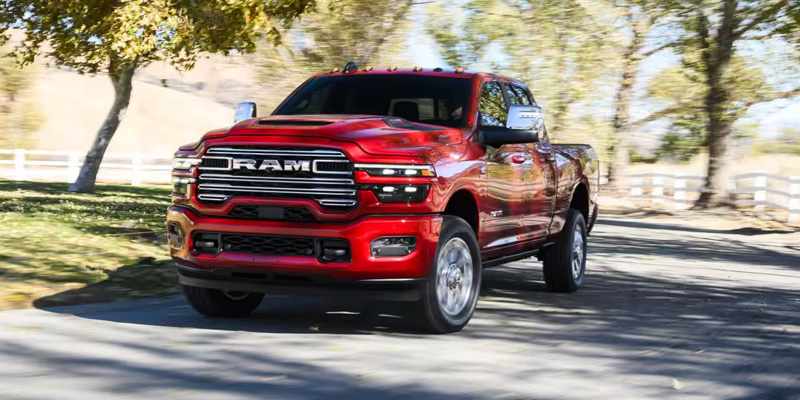
Why This Is a Cost Decision Before a Capability Decision
Most buyers start this comparison by asking what each truck can do. However, that is the wrong starting point. The more useful question is what the upgrade costs and whether the use pattern justifies it. The Ram 2500 starts at a price point several thousand dollars above a comparably equipped 1500. That gap reflects real engineering differences. The 2500 runs a heavier frame, a higher-capacity axle, and a more robust suspension. Still, those differences only pay off when the buyer’s use pattern demands them on a regular basis.
The 1500 is not an underpowered truck. With the 5.7-liter HEMI V8 and eTorque assist, it handles trailer loads up to around 12,000 pounds. Its payload rating runs between 1,800 and 2,300 pounds by configuration. For most recreational towing and moderate work-site use, that capacity is sufficient. So the financial question becomes straightforward. Does your regular use push past those thresholds on a regular basis? If it does not, the 2500 premium goes toward truck specs that sit unused. Meanwhile, operating costs run higher every month.
What the Heavier Platform Costs to Operate
What the heavier platform costs to operate is the part of this comparison that mainland content ignores entirely. In Hawaii, those costs are amplified by two factors. First, fuel prices run above national averages year-round. Second, Hawaii charges weight-based registration fees that increase for heavier trucks. As a result, the financial gap between the two platforms is wider on the island than most mainland guides suggest.
Fuel is the most visible ongoing cost difference. The Ram 2500 with a gas engine returns city figures in the low to mid teens in miles per gallon. By contrast, the 1500 with the same 5.7-liter HEMI returns figures several miles per gallon higher. On Oahu, fuel regularly runs above four dollars per gallon. Consequently, that efficiency gap adds up across a full year of driving. A buyer covering 15,000 miles annually pays a real fuel premium for the HD platform. Furthermore, that cost applies regardless of whether the truck ever tows a trailer.
Tires are a less obvious but significant cost. The 2500 runs larger, load-rated tires that cost more per unit. Additionally, they wear on a heavier vehicle with more axle load at all times. Brakes and suspension components also see more stress on the heavier chassis under standard driving. Beyond that, Hawaii registration fees add another layer. The annual cost on a Ram 2500 runs higher than on a 1500 because the state calculates fees on vehicle weight. That difference, moreover, recurs every year the truck remains registered on the island.
Towing and Payload Thresholds That Separate the Two
Towing and payload are where the 2500 earns its premium. The Ram 1500 is rated for up to approximately 12,750 pounds of towing in its strongest configuration. By contrast, the Ram 2500 with the 6.7-liter Cummins diesel reaches over 20,000 pounds. However, that gap only matters when the buyer’s trailer regularly approaches or exceeds the 1500 ceiling. A buyer towing a 10,000-pound boat trailer is within the 1500 range with margin to spare. In that case, the financial argument for the 2500 weakens considerably. A buyer pulling a 16,000-pound fifth-wheel, however, needs the HD platform and the premium is straightforwardly justified.
Payload tells a similar story. Several variables close the gap between stated rating and usable capacity faster than most buyers expect. The following variables each consume payload before the trailer loads:
- A crew cab with four adults already carries 600 to 700 pounds of passenger weight. Consequently, that number comes directly out of the stated payload rating before any cargo or tongue weight is added.
- A loaded truck bed with tools or equipment adds further to consumed payload. As a result, a 1500 can reach its payload limit without ever approaching its stated tow rating.
- The Ram 2500 raises the payload ceiling by a wide margin. Furthermore, it handles sustained loads without the structural stress a 1500 accumulates when working near its limits on a regular schedule.
Daily Driving Trade-Offs of the HD Platform in Hawaii
Daily driving on the HD platform carries real trade-offs for Pearl City buyers who use the truck on Oahu roads every day. The 2500 is longer, wider, and heavier than the 1500. Its suspension is tuned for load-bearing, not commuter comfort. In Honolulu traffic, that character is noticeable. The steering is heavier and the turning radius is larger. Additionally, parking in tighter lots and residential areas requires more spatial awareness than most 1500 drivers are accustomed to.
Fuel cost in daily driving compounds the registration gap. A buyer commuting forty miles daily in a Ram 2500 gas model spends more on fuel every week than the same driver in a 1500. Over five years, that difference accumulates into a significant total. The Cummins diesel partially offsets this through better highway efficiency. However, the diesel carries a purchase premium of several thousand dollars. Consequently, its efficiency advantage requires an honest mileage estimate to confirm whether it recovers its own cost within a realistic timeframe for an island driver.
The Threshold Test: When the 2500 Premium Is Justified
The clearest way to resolve this comparison is a specific threshold test. The test covers three variables: what you tow regularly, how frequently you tow it, and what your operating budget absorbs across five years. At Cutter Dodge Chrysler Jeep of Pearl City, the team works through this calculation with buyers regularly. The goal is to identify the platform that fits the load and budget. The thresholds break down as follows:
- If your heaviest regular trailer load stays below 10,000 to 11,000 pounds and your payload demands leave margin in the 1500 rating, the half-ton is the financially sound choice. The lower purchase price, better fuel returns, and lower registration cost add up to real savings across five years. Moreover, you give up nothing you will use.
- If your regular trailer load runs between 12,000 and 15,000 pounds, or if your payload demands push the 1500 ceiling on a regular basis, the 2500 becomes the defensible choice. At that load level, the HD platform’s structural advantage justifies the cost premium. Beyond that, a 1500 working near its limits regularly shortens component life and raises long-term repair costs.
- If your loads regularly exceed 15,000 pounds, or if fifth-wheel or gooseneck applications are part of the plan, the 2500 with the Cummins diesel is the appropriate platform. In that case, the premium is straightforwardly justified.
Beyond the threshold calculation, the diesel option deserves a specific look for Pearl City buyers who plan to hold the truck for five or more years. Because Hawaii’s fuel costs run above mainland averages, the diesel’s efficiency advantage pays off more here. A buyer covering 20,000 miles annually will recover the diesel premium faster than one covering 10,000. Therefore, the mileage estimate matters before the decision is made. The team at Cutter Pearl City can walk through that calculation with real numbers, so the financial picture is clear before any paperwork is signed.
Connect with us


- July 2026
- June 2026
- May 2026
- April 2026
- May 2024
- March 2024
- February 2024
- December 2023
- November 2023
- October 2023
- September 2023
- August 2023
- July 2023
- June 2023
- May 2023
- April 2023
- March 2023
- February 2023
- January 2023
- December 2022
- November 2022
- October 2022
- September 2022
- August 2022
- July 2022
- June 2022
- May 2022
- April 2022
- March 2022
- February 2022
- January 2022