




The Ram ProMaster is designed around one core idea: a cargo van should function as a workspace, not just a vehicle. For small business owners in Pearl City, that distinction matters because the way a van is configured directly affects how efficiently work gets done. Many buyers researching ProMaster configurations are not just comparing dimensions. They are trying to understand how cargo space, payload capacity, and vehicle size translate into daily workflow. The difference between ProMaster configurations is not simply length or height. It is how those dimensions shape usable space, load capacity, and maneuverability in real working conditions.

How Ram ProMaster Configurations Are Structured
Many business owners ask what the difference is between Ram ProMaster configurations and how to choose the right one. The answer starts with understanding that the 2026 Ram ProMaster is built using a combination of wheelbase length, roof height, and payload rating.
The 2026 Ram ProMaster wheelbase determines the length of the cargo floor and the amount of uninterrupted storage space available inside the van. A longer wheelbase increases total cargo volume but also increases the vehicle’s overall footprint.
The 2026 Ram ProMaster roof height determines vertical working space. A higher roof allows most users to stand upright inside the cargo area, which changes how the van can be used as a mobile workspace.
Payload rating defines how much weight the van can safely carry. This includes tools, equipment, inventory, and any installed shelving or upfit systems.
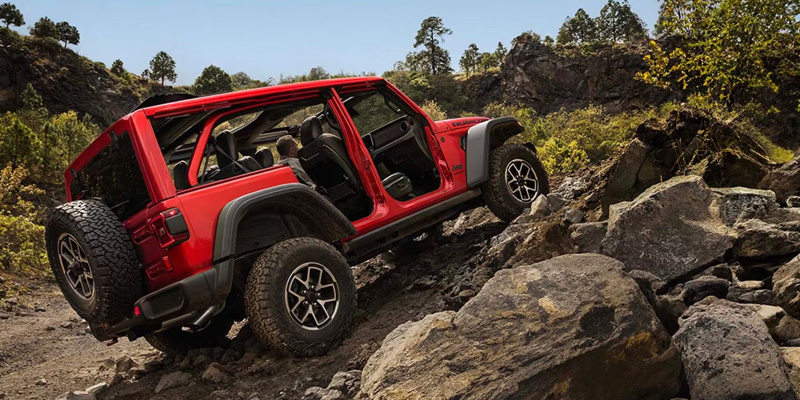
Read the rest of this entry »The 2026 Jeep Wrangler lineup is designed around one core principle: different trims are built to handle different types of terrain. For Oʻahu drivers, that matters more than it might in other markets. Driving conditions can shift quickly from city streets and wet pavement to loose sand, uneven trails, and elevation changes. Many shoppers comparing Wrangler trims are not just asking what features each model includes. They are trying to understand how each version of the 2026 Jeep Wrangler will actually behave across those conditions. The difference between trims is not cosmetic. It is mechanical, and those differences directly affect traction, control, and everyday usability.
How Wrangler Trims Are Structured Around Terrain Capability
Many shoppers researching the 2026 Jeep Wrangler trims ask what separates Sport, Willys, Sahara, and Rubicon. The answer is that each trim adjusts how the vehicle prioritizes terrain capability versus daily driving stability.
The 2026 Jeep Wrangler Sport provides the foundation. It includes the Command-Trac 4×4 system and solid axle construction, which allows it to handle light off-road conditions and uneven surfaces without additional specialized hardware. This makes it suitable for drivers who primarily stay on pavement but want the flexibility to handle occasional dirt or sand.
The 2026 Jeep Wrangler Willys builds on that foundation by introducing more off-road-oriented components. It typically includes more aggressive tire configurations and traction-focused tuning, which improves performance on loose surfaces without moving fully into heavy-duty off-road systems.
Read the rest of this entry »With car-like handling and swift acceleration, stump-pulling torque, and a commanding presence on the road thanks to its muscular, towering stance, the mighty Ram 2500 effortlessly fulfills every expectation of a heavy-duty rig. It can also dabble as a luxury vehicle or an indestructible off-roader if your heart desires. From pulling boats and trailers to tackling construction sites, hauling tons of material, or towing heavy machinery across rough terrain, this article will discuss all the reasons why you won’t want to wait to make the 2024 RAM 2500 your trusted steed.
What You Need to Know About the 2024 RAM 2500
Packs Plenty of Power
The Ram 2500 ensures that power will be the least of your worries when tackling challenges in the field, thanks to its 6.4-liter Hemi V8 that churns out 410 HP and 429 lb-ft of torque. This is enough muscle to haul a payload of 4,000 pounds and boast a towing capacity of up to 17,730 pounds.
And in case you want to engage in real heavy-duty towing, the available 6.7-liter Cummins six-cylinder turbo diesel steps up to the plate with 370 horsepower and a staggering 850 lb-ft of torque to allow it to tow up to 19,990 pounds! When it comes to transmission, the Hemi is paired with an efficient eight-speed automatic while the Cummins is mated to a robust six-speed automatic to ensure smooth power delivery and optimal performance in any situation.
Graceful Handling
You’d expect this hulking rig to be cumbersome to handle, yet the 2024 Ram 2500 defies all expectations by being surprisingly agile. The Hemi V8 that comes standard on this truck launches it from 0 to 60 in an impressive 8 seconds, ensuring you are not sacrificing agility for strength.
Quickness aside, the 2500 handles like a dream with its power steering and rear coil-spring suspension. The light and accurate steering allows you to maneuver with surprising ease in tight spaces, while the coil spring suspension (a step-away from the leaf springs typically used in this class) efficiently absorbs bumps to ensure a smooth, easy, and confident ride.
Practical to a Fault
The 2024 Ram 2500 anticipates all your needs and comes equipped to meet them. The base model, the regular-cab Tradesman 2500, comes with an 8-foot cargo box with 74.7 cubic feet of cargo space to ensure you can haul whatever you need with ease. You can enhance your truck’s versatility by choosing either a crew cab or mega cab, both with 6’4′′ cargo boxes. There’s an available cargo management system called RAMBOX that comes with two lockable, drainable storage bins with LED lighting and a 115-volt power outlet.
Additionally, the 2500 comes with a host of available practical essentials to make several of your day-to-day tasks a breeze, such as the telescopic trailer tow mirrors that extend and retract to allow you to keep a comfortable eye on your trailer, Auto-Level Rear Air Suspension with kneeling function to make loading and hook-up easy, and Trailer Reverse Steering Control that allows you to use the Trailer Steering Knob to guide the trailer as you back up, while the system handles the steering wheel for you.
Serious Off-Roading Capabilities
The Ram 2500 also caters to those who tend to spend a good chunk of time off-roading, battling rough terrains and elements with the available Rebel and Power Wagon models. As you can imagine, they both come with 4WD as well as sharing some necessities, such as Bilsten Gas-Charged Monoshock tubes, to ensure smooth rides over uneven terrain, electronically locking differentials to maximize grip and limit slippage, and skid plates to protect the 2500’s underside and critical components from damage.
However, the Power Wagon does produce significantly more torque with its 4.10 axle ratio compared to the Rebel’s 3.73. All this means that whether you are tackling steep inclines, navigating rocky trails, or going through muddy terrain, you can rest easy knowing that your 2024 Ram 2500 Power Wagon or Rebel is designed to withstand the rigors of off-roading with ease.
Functional Interior
The Ram 2500 dresses according to the occasion. The Tradesman workhorse comes with highly durable vinyl floors and upholstery, hand-crank windows, and manually adjustable split-bench seats to allow for a seating of three.
And for those who prefer a touch of luxury in their truck, the 2024 Ram 2500 offers the Limited trims, which redefine the concept of opulence within a pickup. These models are essentially luxury SUVs with the capabilities of a heavy-duty pickup truck, coming with deluxe features such as ventilated front seats, heated rear seats, bucket seats, leather-wrapped heated steering wheel, leather upholstery with genuine wood trim, and reclining rear seats. With such creature comforts, it’s easy to forget you’re driving a heavy-duty rig.
Convenient Infotainment System
The Ram 2500 understands that all work and no play will make you a dull boy or girl. That’s why even the base Tradesman comes with Uconnect3 featuring a sharp and responsive 5-inch touchscreen, hands-free profile streaming audio, hands-free calling, voice command, voice text reply, and available SiriusXM. All this is to ensure you stay connected, entertained, and productive on the road.
The higher trims convert the cabin into a theater of sorts with the available Uconnect5 with navigation, 8.4- and 12-inch touchscreens, 7- and 12-inch digital instruments clusters, Apple CarPlay and Android Auto connectivity, wireless charging, Wi-Fi hot spot, and music from the premium 17-speaker Harman Kardon stereo system. Again, if someone were to blindfold you and put you inside a top-end 2024 Ram 2500, you would have a difficult time believing that you’re not in a luxury SUV.
Does the Ram 2500 sound like your ideal partner at work and in life? Would you love to take it out for a spin? Contact us today at Cutter CDJR of Pearl City, HI to schedule your free test drive and expert consultation.
Chrysler first popularized the minivan nationwide. Now, this pioneering automaker is proud to offer the only plug-in hybrid minivan in America. The 2024 Chrysler Pacifica Plug-in Hybrid gets you and your family where you want to go.
Premium Interior for Active Families
With third-row seating, the Pacifica can seat up to seven, and it does so with the proven safety and practical reliability of a minivan. Slide the side doors out fully, something you can’t do in an SUV, to discover the Pacifica’s new premium interior. The heated front seats and heated steering wheel keep you cozy, while a soft-touch instrument panel and stitched accents make you feel right at home.
Even with all of this upgraded comfort, the Pacifica Hybrid is still ready for your active family lifestyle. There’s ample space and plenty of cupholders, slide-out bins, and hooks to store your food & snacks, hockey equipment, camping gear, or luggage.
Smooth and Quiet Ride
This minivan can do everything, and the ability to configure its seating to your liking is what makes it so conveniently versatile. For times you’re ferrying along a whole party, Second-Row Easy Tilt Seating makes climbing into and out of the third row a breeze. When you need to load and unload, the power liftgate and available hands-free power sliding side doors make it a cinch.
If you’re wondering about cargo room, don’t forget that Chrysler invented Stow ‘n Go seating. Unlike other vans that require you to remove seats for more capacity, the Pacifica features seats that fold neatly into the floor: yes, both second and third rows. When they lie flat, the Pacifica blows away the competition with 140.5 cubic feet of cargo space.
Maximum Cargo Flexibility
On the road, the Pacifica lives up to its namesake. You’ll marvel at how peaceful the cabin is, especially when your hybrid engine is operating in its quiet all-electric mode. A nine-speed automatic transmission and tuned suspension also contribute to a smooth ride.
If you want to become a true believer, test drive a 2024 Chrysler Pacifica Plug-In Hybrid at your local dealer. You’ll notice how it rides and handles more like a sedan than a passenger van. It has great maneuverability aided by relaxed steering, and when you round corners, it minimizes body roll to make turning feel like a stroll in the park.
Top Safety Features
Chrysler understands that your family’s safety is your number one priority. That’s why the Pacifica Plug-in Hybrid comes standard with innovative life-saving technologies. These include:
- Automatic emergency braking with pedestrian detection
- Blind-spot monitoring with rear cross-traffic alert
- Lane-departure warning with lane-keep assist
- Rearview camera and rear parking sensors
- Rear-seat alert for kids
Fantastic Range for Daily Commutes and Road Trips
Perhaps you want to go green, but you’re not sure a fully electric vehicle can do the job. The 2024 Chrysler Pacifica Plug-in Hybrid answers this concern by giving you the best of both worlds. That’s why it’s been shortlisted as a plug-in hybrid that will get you addicted to driving electric. When fully charged, this vehicle can drive in all-electric mode for a range of 32 miles.
When the battery’s depleted, however, you won’t be stranded. The Pacifica switches seamlessly to gas-electric operation, where it employs technologies like regenerative braking to reduce fuel consumption. Family road trips are welcome because when the Pacifica is fully charged and has a full tank of gas, it reaches an incredible range of 520 miles. If you can’t picture how far that is, imagine driving all the way from Chicago to Nashville without stopping for a fill-up.
Fuel Efficiency
Chrysler is committed to clean technology for a new generation of families. That’s why the Pacifica Hybrid’s traditional 3.6-liter V6 engine is assisted by 2 electric motors and a 16-kWh battery pack. These components work together beautifully to reach a fuel efficiency of 84 MPGe combined. Compare that to what you get from a conventional SUV, and it’s not even close.
What makes this possible on the Pacifica Plug-in Hybrid is a built-in charger that quickly replenishes its PHEV battery. Plug your minivan in overnight to a regular household outlet, and its all-electric mode will be ready for a gas-free commute the next morning. Or, if you want to see how far EV technology has truly come, install the available Level 2 charger, and it’ll be topped up in just a little over two hours.
Uconnect Infotainment System
The Pacifica Hybrid’s electrical framework enables it to be the most technologically advanced minivan in its class. Enjoy an expansive 10-inch screen with hands-free voice command. When you want to charge your smart devices, connect them to USB ports located throughout the cabin. If you don’t feel like using a cable, link your phone to your car’s infotainment system using wireless Apple CarPlay/Android Auto capability.
To keep an eye on the kiddos without having eyes in the back of your head, turn on the available FamCAM. Its automatic day/night modes and split-view screen show you the backseat on your dash. Or, keep your passengers entertained with the available rear-seat dual touchscreens that they can watch movies and TV on using their favorite streaming apps.
Generous Tax Credits
Did you know that plug-in hybrids also qualify for the federal EV tax credit? This means you can get up to $7,500 back on your Pacifica Plug-in Hybrid. If you want an even better deal, there might be multiple state tax credits that you can claim on top of the federal one. Be aware that these credits can change every year due to legislation, so take advantage of them now while you still can.
See these fantastic features in action at Cutter CDJR of Pearl City. Stop in and test drive the 2024 Chrysler Pacifica Plug-in Hybrid today!
There are plenty of fantastic things to do and see in Pearl City, HI, but you need a reliable ride to get around. These exceptional vehicles available at your CDJR dealer are excellent for newer drivers, with fantastic safety features like emergency braking and rearview cameras. New drivers can feel comfortable exploring to their heart’s content while knowing that their vehicle always has their back.
6 Great Vehicles for New Drivers at Your CDJR Dealer in Pearl City, HI
1. 2024 Chrysler Pacifica Touring L
The 2024 Chrysler Pacifica Touring L at your CDJR dealer is a robust and roomy vehicle with tons of excellent safety features like a backup camera, blind spot monitor, and forward collision warning. Newer drivers will also love the rain-sensing wipers that automatically adjust to the conditions around, and side-impact airbags will keep you and your passengers safe in the event of the worst-case scenario.
Plus, these vehicles come with other great perks, like power seats and automatic climate control, so every ride is as comfortable as possible.
2. 2024 Jeep Compass Sport 4×4
This 2024 Jeep model allows you to see all of Pearl City, HI, in complete comfort, style, and safety. It’s equipped with all-wheel drive, perfect for navigating curvy roads and staying in control every mile of the drive.
Also, smart safety features like lane departure warning and forward collision warning give newer drivers an advantage on the road and help them stay focused on longer drives. A Wi-Fi hotspot and push start round off the top features that you’ll find in the exceptional Jeep Compass.
3. 2024 Dodge Hornet GT AWD
One of the top models available at your CDJR dealer, the 2024 Dodge Hornet GT AWD comes with all-wheel drive and a host of sophisticated safety features perfect for keeping newer drivers confident and safe on the road. Rain-sensing wipers give you ideal visibility, and side-impact airbags keep everyone secure.
You can’t beat the safety features of this model. It comes with a backup camera, parking sensors, forward collision warning, and lane departure warning, all of which keep you aware of everything happening around you and parking easily in more congested spots. This vehicle is ideal for newer drivers because it acts like an extra set of eyes on the road.
4. 2023 Jeep Renegade Limited 4×4
The ideal vehicle for exploring Pearl City, HI, the 2023 Jeep Renegade Limited 4×4 is comfortable and safe, with excellent amenities like automatic climate control and power seats. It also comes with a powerful navigation system, which is fantastic for newer drivers who might not have an internal map of the roads. Top safety features include lane departure warning, rain-sensing wipers, and forward collision warning.
5. 2023 Jeep Cherokee Altitude Lux 4×4
The 2023 Jeep Cherokee Altitude Lux 4×4 is a great option available at your CDJR dealer, with several different perks that make them excellent vehicles for newer drivers. Foglights and rain-sensing wipers keep visibility on point no matter what kind of weather you’re driving in, and power seats keep you comfortable on long drives.
You’ll also find convenient and practical features like a push start and parking sensors, making them ideal vehicles for people learning to navigate city traffic. Plus, they come with a play-by-play navigation system so you can find your way around without having to take your attention off the road.
6. 2023 Dodge Durango R/T AWD
This vehicle is a roomy ride with plenty of space for your whole family, and it’s a great option for newer drivers thanks to tons of safety features and all-wheel drive. Built-in features like a backup camera, blind spot monitor, and forward collision warning eliminate blind spots and help newer drivers keep eyes around them at all times.
There are also plenty of strategically placed side-impact airbags and rain-sensing wipers, which give you further protection on every drive. Thanks to an intuitive navigation system, you’ll be able to know where you’re going at all times.
Features to Look for in Great Cars for Newer Drivers
There are plenty of vehicles in Pearl City, HI, perfect for newer drivers. When shopping for your ideal vehicle, keep these top features in mind: top-notch safety features and drivability definitely top the list.
Blind Spot Monitors and Rearview Cameras
Knowing how to properly check your blind spot can be difficult for newer drivers, which is why the best vehicles have automatic monitors that can let you know if there’s an obstacle in your blind spot. Plus, rearview cameras help you get a clear view of what’s behind, ideal for people not totally comfortable with parking.
Strategically-Placed Airbags and Emergency Braking
Having airbags in the front and sides of the vehicle will help you feel much safer and protect you and your passengers in the event of the worst. Plus, emergency braking can automatically stop your vehicle and prevent accidents. Both of these features are excellent for newer drivers.
Forward Collision Warning Sensors
Another way great vehicles keep newer drivers safe is through features like forward collision warning. Vehicles equipped with these features can sense obstacles in the road or potential problems and let the driver know that there’s an obstacle coming up. This way, they’re able to totally prepare you and help newer drivers use those few extra minutes to prepare and course correct.
Other excellent features, like lane change monitoring, automatic windshield wipers, and fog lights, will all work with newer drivers to ensure a smooth and stress-free journey.
Pick up a Safe, Reliable, and Great Ride Today
If you’re looking for an exceptional vehicle, we have you covered. With plenty of models specifically designed for the ease and comfort of newer drivers and a knowledgeable staff that can help you select the right one for you, you’re guaranteed to drive away with something great. Visit Cutter CDJR Pearl City in Pearl City, HI, and test drive a sophisticated and safe vehicle today.
How Does Your Credit Score Affect Your Car Loan
Key Takeaways:
- Your credit score significantly influences the interest rate on your car loan.
- A higher credit score can result in lower monthly payments and overall loan costs.
- Understanding the credit score range and lender criteria is crucial before applying for a car loan.
- Regularly checking your credit report can help identify and rectify any errors affecting your score.
- Pre-approval processes can give you a clearer picture of your borrowing capacity and potential interest rates.
- Co-signers can benefit individuals with lower credit scores, enhancing their approval chances.
- Explore different lenders and financing options to find the most favorable terms for your situation.
As a prospective car owner, the journey to securing your dream vehicle is undoubtedly an exciting one. The sleek curves, the hum of a powerful engine, and the scent of a new car interior-it’s an experience that transcends mere transportation. But before you take the wheel, a crucial factor could make or break your automotive aspirations: your credit score.
In the realm of car loans, your credit score acts as a key that unlocks the doors to favorable interest rates and flexible payment plans.
Imagine a highway where your creditworthiness determines the road signs. Welcome to the world of car financing, where your credit score not only influences the interest rates but also shapes the entire trajectory of your loan. Before you rev up your engines and head to the nearest dealership, let’s delve into the intricate relationship between your credit score and the car loan you’re eyeing.
Ready to hit the road in your dream car? Visit Cutter CDJR of Pearl Cityor exclusive deals and financing options.
How Your Credit Score Drives the Interest Rate
When it comes to securing a car loan, your credit score plays a pivotal role in determining the interest rate attached to it. Lenders use your credit score as a measure of your creditworthiness-a numerical representation of your financial responsibility. The higher your credit score, the lower the perceived risk for the lender, resulting in more favorable interest rates for you.
Conversely, a lower credit score may lead lenders to view you as a higher-risk borrower, prompting them to compensate for this risk by offering a loan with a higher interest rate. That not only affects your monthly payments but also determines the overall cost of the loan. In essence, your credit score becomes the compass guiding your journey through the financial landscape of car ownership.
The Credit Score Range
Understanding the credit score range is crucial for anyone embarking on the car loan approval process. Credit scores typically range from 300 to 850, with higher scores indicating better creditworthiness. Here’s a breakdown of the credit score categories:
- 300-579: Poor
- 580-669: Fair
- 670-739: Good
- 740-799: Very Good
- 800-850: Excellent
Before setting foot in a dealership, know where you stand within this range. Lenders often categorize borrowers based on these ranges and being aware of your credit score can help you anticipate the interest rates you’re likely to encounter.
The Pre-Approval Advantage
One strategic move in the car financing game is getting pre-approved for a loan. This process involves a lender assessing your creditworthiness and providing a preliminary loan offer. That gives you a clearer picture of the interest rates you can expect and demonstrates to sellers that you are a serious and qualified buyer.
Pre-approval streamlines the car-buying process and allows you to compare offers from different lenders. It puts you in the driver’s seat, empowering you to negotiate better terms and ensuring you don’t end up paying more than necessary.
Building Credit for Better Loan Terms
If your credit score isn’t in the top tier, fear not. Building credit over time is a proactive step that can improve your chances of securing a favorable car loan. Consistent, on-time payments on existing debts, reducing outstanding balances, and avoiding new credit applications can contribute positively to your credit score.
Think of your credit score as a road under construction. With each timely payment and responsible financial decision, you’re laying down a smoother path toward better loan terms. Patience and persistence can turn a challenging credit situation into a success story when it comes to financing your car.
The Co-Signer Solution
Having a co-signer can be a game-changer for those with less-than-ideal credit scores. A co-signer is someone with a stronger credit history who agrees to take joint responsibility for the loan. This arrangement reassures lenders, potentially resulting in more favorable loan terms.
If you have a friend or family member willing to vouch for your creditworthiness, leveraging their good credit can open doors that might otherwise remain closed. However, it’s essential to communicate openly and honestly with your co-signer, as any financial misstep on your part can impact both your credit scores.
Exploring Lenders and Financing Options
Don’t settle for the first loan offer that comes your way. Like test-driving different cars, exploring various lenders and financing options is crucial to finding the best deal. While traditional banks are an obvious choice, consider credit unions, online lenders, and dealership financing.
Each lender may have different criteria and policies; some may be more lenient or specialized in dealing with specific credit situations. Research and comparison shopping can pay off in the form of lower interest rates, better terms, and a more satisfying overall car-buying experience.
Conclusion
In the grand journey of car ownership, your credit score is the compass that guides you. Understanding its impact on your car loan can make the difference between a smooth ride and a bumpy road filled with financial challenges. As you navigate the twists and turns of car financing, remember that your credit score isn’t just a number; it’s the key to unlocking your automotive dreams.
Ready to take the first step toward your dream car? Explore exclusive deals at Cutter CDJR of Pearl City and turn your car ownership aspirations into reality.
Key Takeaways:
- Research and Set a Budget: Understand your needs and financial limits.
- Secure Pre-approved Financing: Streamline the process with pre-arranged financing.
- Test Drive Multiple Vehicles: Assess performance, comfort, and features.
- Understand the Total Cost of Ownership: Factor in taxes, registration, insurance, and maintenance.
- Thoroughly Inspect Vehicles: Check for mechanical and aesthetic issues.
- Take Your Time: Avoid rushed decisions; reflect on your choices.
- Negotiate Wisely: Be prepared to negotiate the overall price, not just monthly payments.
- Review and Understand the Contract: Scrutinize terms, interest rates, and additional fees.
- Sleep on It Before Finalizing: Ensure the chosen vehicle aligns with your needs and budget after reflection.
Embarking on the journey to buy a car can be both thrilling and challenging. To help potential car owners confidently navigate this process, we’ve compiled a comprehensive guide. Whether you’re a first-time buyer or looking to upgrade, this step-by-step guide will lead you through the intricacies of the car buying process. From initial research to the final decision, empower yourself with the knowledge needed to make informed choices and drive away satisfied.
Ready to turn your car buying experience into a seamless journey? Explore our extensive selection at Cutter CDJR Pearl City.
How to Navigate the Car Buying Process: A Comprehensive Guide
1. Research and Set a Budget
Embarking on the car buying process begins with thorough research. Understand your needs, preferences, and budget constraints. Dive into researching different car models, their features, and market prices. This initial step helps set clear parameters for your search and prevents the allure of vehicles outside your budget. Establishing a budget early on guides your choices and empowers you during negotiations, ensuring you make a financially sound decision that aligns with your goals.
2. Secure Pre-approved Financing
Streamlining the buying process involves securing pre-approved financing. Take the time to explore financing options from your bank or credit union. By doing so, you gain a clear understanding of your budget and enhance your negotiating power when dealing with dealerships. Pre-approved financing provides a solid foundation, allowing you to focus on finding the right vehicle without uncertainties about financing terms.
3. Test Drive Multiple Vehicles
The importance of a test drive cannot be overstated in the car buying process. Visit multiple dealerships and test drive various vehicles. This hands-on experience allows you to assess the performance, comfort, visibility, and technology features of each car. By testing different models, you gain valuable insights into how each aligns with your driving preferences, helping you make an informed decision.
4. Understand the Total Cost of Ownership
Beyond the excitement of the showroom, it’s crucial to consider the total cost of ownership. Negotiating the overall price, rather than fixating on monthly payments, ensures a comprehensive understanding of the financial commitment. Factor in taxes, registration, insurance, and potential maintenance costs. This holistic approach prevents surprises down the road, enabling you to make a well-informed decision that aligns with your budget and financial goals.
5. Thoroughly Inspect Vehicles
As you narrow down your choices, thorough vehicle inspection becomes paramount. Examine both the mechanical and aesthetic aspects of the cars you’re considering. Look for signs of wear, damage, or potential issues impacting the vehicle’s long-term reliability. This meticulous inspection ensures that you not only choose a visually appealing car but also one that meets your expectations for performance and maintenance.
6. Take Your Time
In the fast-paced environment of a dealership, taking your time is a powerful strategy. Avoid the pressure of making rushed decisions. Take a step back, reflect on your choices, and ensure the selected vehicle meets your needs and desires. A patient approach allows you to make a decision based on careful consideration rather than succumbing to the urgency of the sales environment.
7. Negotiate Wisely
Negotiating with the dealership is a crucial skill in the car buying process. Be prepared to negotiate the overall price, not just the monthly payments. Understanding the vehicle’s fair market value and being willing to walk away if the terms don’t align with your budget are crucial aspects of wise negotiation. This step ensures that you secure a deal that is not only fair but also in line with your financial goals.
8. Review and Understand the Contract
Before finalizing any agreements, meticulously review and understand the contract. Scrutinize the terms, interest rates, loan duration, and any additional fees. Clear any uncertainties by seeking clarification from the dealership. A comprehensive understanding of the contract terms ensures that there are no surprises down the road, allowing you to proceed with confidence.
9. Sleep on It Before Finalizing
The final step before making your decision is to take the time to sleep on it. Allow yourself a night to reflect on the chosen vehicle, ensuring it aligns with your needs, budget, and overall goals. This reflective period provides a fresh perspective, allowing you to confirm that the decision made in the showroom remains the right one in the light of day. It safeguards against impulsive choices, ensuring that your car buying experience is one of satisfaction and confidence.
Drive Away with Confidence from Cutter CDJR Pearl City
In conclusion, navigating the car buying process involves making informed decisions at every step. This comprehensive guide equips you with the knowledge needed to navigate the journey confidently. Explore Cutter CDJR Pearl City’s extensive selection and find the perfect vehicle for you. Visit our dealership and turn your car buying experience into a seamless journey with expertise and satisfaction.
9 Transmission Problems You Should Know
Key Takeaways:
- Understanding common transmission problems can help you detect issues early and prevent costly repairs.
- Regular maintenance and prompt attention to transmission issues are essential for a healthy, long-lasting vehicle.
- Recognizing the signs of transmission problems can save you time, money, and stress down the road.
- Don’t underestimate the importance of professional diagnostics and servicing for your vehicle’s transmission.
As a car owner, you cherish the freedom and convenience that your vehicle provides. Whether it’s the daily commute, weekend road trips, or the simple joy of cruising on a beautiful day, your car is an essential part of your life. However, to keep your vehicle running smoothly, it’s crucial to understand the various components that make it tick. Among these, your transmission is a vital piece of the puzzle. Transmission problems can quickly turn your smooth ride into a bumpy journey, causing frustration and potentially hefty repair bills.
Ready to safeguard your car’s transmission? Let’s dive into transmission problems, their signs, and how to address them.
9 Transmission Problems You Should Know
Your car’s transmission transfers power from the engine to the wheels, enabling it to move forward and backward smoothly. Here are nine common transmission problems to be mindful of:
1. Delayed Shifting
When your vehicle experiences delayed shifting, it can be an early indication of a transmission problem. This issue is often characterized by a noticeable lag between the moment you shift from “Park” to “Drive” or “Reverse” and the vehicle’s actual response. Your car may be reluctant to engage the requested gear, resulting in a sluggish and unresponsive driving experience. Various factors, including low transmission fluid levels, worn clutch components, or issues with the transmission control module, can cause delayed shifting.
2. Transmission Slipping
Transmission slipping is a concerning problem that manifests as an abrupt and unexpected change in gears or an inability to sustain a specific gear. It feels as though your car momentarily loses power, and the engine may rev without a corresponding increase in speed. This issue can create a jerky and inconsistent driving experience, potentially making your vehicle unsafe to operate. Transmission slipping can result from problems such as worn-out clutch components, low transmission fluid levels, or a malfunctioning torque converter.
3. Overheating
Transmission overheating is a critical concern resulting from several factors, including low transmission fluid levels, a malfunctioning cooling system, or strenuous driving conditions. When your transmission overheats, it can lead to severe internal damage and decreased performance. Overheating can cause the transmission fluid to break down, leading to poor lubrication and potential component wear. Additionally, overheating can damage internal seals and gaskets, leading to fluid leaks and potential transmission failure.
4. Fluid Leaks
Transmission fluid leaks are a common and concerning problem that can signal various issues within the transmission system. Transmission fluid is critical in lubricating components, cooling the transmission, and facilitating smooth gear shifts. Leaks can lead to a loss of fluid, inadequate lubrication, and potential damage to transmission components.
Identifying transmission fluid leaks is relatively straightforward. Look for reddish or brownish fluid spots on the ground beneath your parked vehicle. Damaged seals, gaskets, or worn components within the transmission often cause these leaks.
5. Strange Noises
Unusual noises emanating from your vehicle, especially during gear shifts or when the car is in neutral, can signal transmission issues. Common noises associated with transmission problems include grinding, clunking, or whining sounds. Grinding noises typically occur during gear shifts, indicating worn-out or damaged gears. Clunking sounds may suggest issues with the transmission’s synchronizers or other internal components. Whining noises can be related to low transmission fluid levels or problems with the transmission pump.
6. Warning Lights
Modern vehicles are equipped with a range of warning lights on the dashboard to alert drivers to potential issues. Two critical warning lights related to transmission problems are the “Check Engine” light and the “Transmission” light. If either of these lights illuminates, it’s vital to address the issue promptly. The “Check Engine” light can indicate various problems, including those related to the transmission. The light is triggered by the vehicle’s onboard diagnostics system, which monitors multiple components for irregularities.
7. Stalling
Transmission problems can lead to engine stalling, particularly when shifting gears or coming to a stop. Stalling is not only inconvenient but can also be dangerous, especially when it occurs in heavy traffic or at intersections. When your vehicle stalls, it may abruptly lose power and shut down, leaving you stranded and requiring a restart. Stalling can result from various transmission issues, such as clutch problems, transmission fluid leaks, or a malfunctioning torque converter. These issues can disrupt the smooth operation of your transmission and engine, leading to stalling episodes.
8. Rough Shifting
Rough or harsh shifting refers to a noticeable jolt or jerk during gear changes, making your driving experience uncomfortable and potentially damaging other drivetrain components. This issue is characterized by abrupt and unsmooth transitions between gears, resulting in a jerking sensation. Rough shifting can be caused by several factors, including a malfunctioning clutch, low transmission fluid levels, or issues with the transmission’s control module.
9. Reduced Fuel Efficiency
A sudden drop in miles per gallon can indicate transmission problems. When your vehicle’s transmission isn’t operating efficiently, it can cause your engine to work harder, resulting in decreased fuel efficiency. Reduced fuel efficiency can be a clear indicator of issues that require attention. Transmission problems that lead to reduced fuel efficiency can include slipping gears, inadequate fluid levels, or increased friction within the transmission. These issues can force your engine to consume more fuel to compensate for the decreased power transfer efficiency.
Don’t Ignore These Transmission Problems
Understanding the most common transmission problems and their signs is vital for every car owner. It can save you from unexpected breakdowns, costly repairs, and the stress of dealing with a malfunctioning transmission. If you’re experiencing any of the symptoms mentioned in this article, it’s crucial to have your vehicle inspected by a professional mechanic promptly.
For professional transmission diagnostics and servicing, visit Cutter CDJR Pearl City. Our expert technicians and state-of-the-art facilities can address your transmission problems and keep your car running smoothly!
Top 10 Signs That Your Car Needs Brake Service
Key Takeaways:
- To ensure the safety and reliability of your vehicle, it’s crucial to schedule regular brake inspections.
- Make it a habit to inspect your brake pads visually. If you see the wear indicators or notice significant wear on the pads, it’s time to replace them.
- If you detect a burning smell when using your brakes, don’t ignore it.
- Knowing that your brakes are in excellent condition provides peace of mind while driving.
- Maintaining your brakes ensures consistent and reliable stopping power, allowing you to react effectively to unexpected road conditions or hazards.
As a car owner, ensuring your vehicle is in excellent condition is paramount for your safety and the safety of others on the road. In this regard, One of your car’s most critical components is the braking system. Your car’s brakes are the primary means by which you can control your vehicle’s speed and bring it to a stop. However, like any mechanical part, they require regular attention and care. In this article, we’ll delve into the world of brake inspections. Specifically, we’ll explore nine signs your car is trying to communicate, indicating it’s time for a brake inspection. Read on!
Spongy Brake Pedal
A spongy brake pedal can also indicate worn brake pads or fluid issues. Regardless of the cause, it’s a warning sign that should not be ignored. When you press the brake pedal, there should be a direct and immediate response from your brakes. If you have to press the pedal further than usual or if it feels mushy, it’s time to schedule a brake inspection.
Unusual Noises
Unusual noises from your brakes can clearly indicate that it’s time for an inspection. When your brakes are in good condition, they should operate quietly and smoothly. However, if you start hearing strange noises when you apply the brakes, it’s time to take notice.
Examples of noise to watch out for include:
- High-pitched squeal
- Grinding sound
- Clunking, clicking, or thumping sounds
Vibration or Pulsation
When you apply the brakes, your car should come to a smooth and controlled stop. If you experience vibration or pulsation in the brake pedal or steering wheel when braking, it’s a sign that your car’s braking system needs attention. This vibration or pulsation is often caused by uneven wear on the brake rotors. When the brake pads press against the rotor, they create friction to slow down the vehicle. Over time, this friction can lead to uneven wear on the rotor’s surface. As a result, the rotor may develop high and low spots, leading to the pulsation you feel when braking.
Longer Stopping Distances
If your car’s stopping distances have increased, it clearly shows that your brakes need attention. In normal conditions, your brakes should provide consistent and predictable stopping power. When this changes, it’s a warning sign that something is amiss. Longer stopping distances can be attributed to several factors, including worn brake pads, damaged brake rotors, or brake fluid issues.
Warning Lights
Modern vehicles are equipped with advanced warning systems, including dashboard warning lights. If your car’s brake warning light illuminates, it indicates that the braking system needs attention. This warning light can take various forms, such as an exclamation mark inside a circle or the word “BRAKE.” When it lights up, it’s usually due to a specific issue with the brake system, such as low brake fluid, worn brake pads, or a malfunction in the brake sensors.
Pulling or Drifting
Pulling or drifting can result from uneven brake pad wear, a malfunctioning brake caliper, or problems with the brake fluid distribution. In any case, this issue affects your ability to maintain control and even braking. It’s a safety concern and an indication of reduced braking efficiency. When your car pulls to one side, it can lead to unpredictable steering, posing a risk to you and other drivers. To ensure consistent and reliable braking performance, addressing pulling or drifting promptly through a professional brake inspection is crucial.
Reduced Brake Responsiveness
If your brakes are less responsive than usual, it signals that something is wrong with the braking system. Reduced brake responsiveness can manifest as a delay between pressing the brake pedal and your vehicle’s actual slowing or stopping. Various factors, such as worn brake pads, air or moisture in the brake lines, or issues with the brake master cylinder, can cause this delay.
Visible Brake Pad Wear
A precise visual inspection of your brake pads can reveal a lot about their condition. Most brake pads have wear indicators that become visible as the pads wear down. These indicators are typically small metal tabs that contact the brake rotor when the pads reach a certain level of wear. When you see these indicators, it’s a sign that your brake pads have reached a point where they need replacement.
Leaking Brake Fluid
Your car’s braking system relies on hydraulic pressure to engage the brakes. Brake fluid plays a crucial role in this process, transmitting force from the brake pedal to the brake calipers and squeezing the brake pads against the rotors. If you notice brake fluid leaks in or around your vehicle, it’s a sign of a severe issue.
Burning Smell
If you detect a burning smell, mainly when you apply the brakes, it can be a warning sign of brake problems. This odor often indicates overheated brakes, resulting from prolonged and excessive braking, such as when driving downhill or towing heavy loads.
Overheating the brakes can lead to reduced braking efficiency and, in extreme cases, brake fade, where the brakes become less effective in slowing down or stopping the vehicle. It can also damage the brake pads and rotors, necessitating costly replacements.
In conclusion, your car’s brakes are a fundamental safety feature, and keeping them in optimal condition is crucial. Recognizing the signs that your vehicle needs a brake inspection can prevent accidents, save you money on potential repairs, and ensure a smooth and safe driving experience.
And by staying vigilant and addressing brake issues promptly, you can maintain the reliability and effectiveness of your braking system, ensuring that your car stops when you need it to. Your safety, as well as the safety of other road users, depends on well-maintained brakes. Don’t delay – schedule that brake inspection today for peace of mind behind the wheel.
How to Keep Your Car in Good Condition
Key Takeaways:
- Regular maintenance is the foundation of keeping your car in good condition.
- Simple practices like frequent oil changes and tire rotations can extend your car’s lifespan.
- Pay attention to warning signs, strange noises, and dashboard indicators to catch issues early.
- Consistent cleaning and care of the interior and exterior are essential for preserving your car’s appearance.
- Proper storage and driving habits improve your car’s overall health and longevity.
As a car owner, your vehicle is more than just a mode of transportation; it’s an essential part of your daily life. Whether you rely on your car for commuting, road trips, or simply enjoying the freedom of the open road, you want it to perform reliably and look its best. Keeping your car in good condition is not just about appearances; it ensures safety, longevity, and a smooth driving experience. In this comprehensive guide, we’ll explore the practices, habits, and maintenance tips that can help you maintain your car’s pristine condition. From regular maintenance routines to careful cleaning and storage, we’ll cover all aspects of car care.
If you need professional assistance or a new vehicle, our trusted car dealership is here to help you keep your car in top shape!
The Significance of Vehicle Care: A Solid Maintenance Foundation
Car maintenance isn’t a one-off task; it’s an ongoing dedication. Sustained care ensures your vehicle’s safety, performance, and long-term endurance. It’s vital to keep up with routine medical check-ups, aiming to identify and prevent potential health issues before they become serious.
Moreover, routine maintenance assignments, such as timely oil changes, vigilant brake inspections, and tire rotations, prove significantly more economical than addressing significant repairs resulting from neglected issues.
Regular Maintenance Practices: The Road to Longevity
Regular maintenance is the cornerstone of keeping your car in good condition. Here are the primary tasks you should perform on a schedule:
Oil Changes and Fluid Checks
Regular oil changes are crucial as engine oil lubricates critical components, reducing friction and heat. Over time, oil breaks down and becomes less effective, potentially leading to engine damage and reduced fuel efficiency. Other essential fluids like transmission, brake, coolant, and power steering should also be checked and topped up as needed.
Tire Maintenance
Proper tire maintenance is essential for safety and performance. Regularly check tire pressure, as underinflated tires can reduce fuel efficiency and compromise handling. Also, inspect the tire tread for signs of wear and consider rotating your tires regularly for even wear.
Brake Inspections
Your brakes are a critical safety component. Regular brake inspections can identify worn brake pads, damaged rotors, or other issues affecting stopping power. Replacing brake pads and maintaining a healthy braking system is crucial for safe driving.
Battery Care
A reliable battery is essential for starting your car. Ensure that your battery’s terminals are clean and free of corrosion. Consider having the battery tested periodically to check its health. A weak or failing battery can leave you stranded when you least expect it.
Early Issue Detection
In addition to regular maintenance, it’s vital to pay attention to your car’s behavior and address any unusual signs or sounds promptly:
Dashboard Indicators
Modern cars are equipped with a range of sensors that can detect issues and display warning lights on your dashboard. Don’t ignore these indicators; they can warn early about potential problems.
Strange Noises
Unusual sounds, such as squealing brakes, grinding gears, or engine rattling, should not be ignored. These noises can indicate issues that need immediate attention. For example, a squealing noise when braking may signal worn brake pads.
Leaks
If you notice any fluid leaks under your car, investigate their source. Leaking oil, coolant, or other fluids can lead to engine damage or overheating.
Interior and Exterior Care: Preserving Your Car’s Beauty
Keeping your car in good condition extends beyond what’s under the hood. Proper care of both the interior and exterior is essential to maintain its appearance and functionality:
Regular Cleaning
Cleaning your car inside and out is not just about aesthetics; it’s about preserving the materials. Dirt, dust, and grime can accelerate wear and tear. Regularly wash the exterior, vacuum the interior, and use appropriate cleaners for different surfaces.
Upholstery and Interior Maintenance
Use seat covers and sunshades to protect your car’s interior from spills, stains, and UV damage. Use conditioners and cleaners for leather or fabric seats to maintain their appearance and comfort.
Waxing and Polishing
Regular waxing and polishing protect your car’s paintwork from the elements and maintain its shine. The wax acts as a protective barrier against environmental contaminants.
Proper Storage
If you have the option, storing your car in a garage or under a car cover can protect it from the sun, weather, and potential damage.
Safe Driving Habits: Preserving Your Car’s Health on the Road
Your driving habits also play a role in keeping your car in good condition:
Smooth Acceleration and Braking
Avoid sudden starts and stops, as these can strain your engine and transmission. Gradual acceleration and braking are safer and kinder to your car.
Regular Maintenance of Suspension
Properly maintained shocks and struts help absorb road shocks, protecting your car’s frame and components. Have them checked periodically and replaced when necessary.
Avoid Overloading
Be mindful of your car’s weight limit and avoid overloading it with heavy cargo. Excess weight can strain the suspension, brakes, and other critical components.
Keep Your Car in Good Condition
Keeping your car in good condition requires a combination of regular maintenance, vigilant issue detection, proper cleaning, and safe driving habits. Following these practices can extend your car’s lifespan, improve its performance, and enjoy a well-maintained vehicle. Should you require professional maintenance or are in the market for a new vehicle, our trusted car dealership, Cutter CDJR Pearl City, is ready to assist you. Your journey to a well-maintained car begins with informed decisions and proactive care.
Connect with us


- July 2026
- June 2026
- May 2026
- April 2026
- May 2024
- March 2024
- February 2024
- December 2023
- November 2023
- October 2023
- September 2023
- August 2023
- July 2023
- June 2023
- May 2023
- April 2023
- March 2023
- February 2023
- January 2023
- December 2022
- November 2022
- October 2022
- September 2022
- August 2022
- July 2022
- June 2022
- May 2022
- April 2022
- March 2022
- February 2022
- January 2022